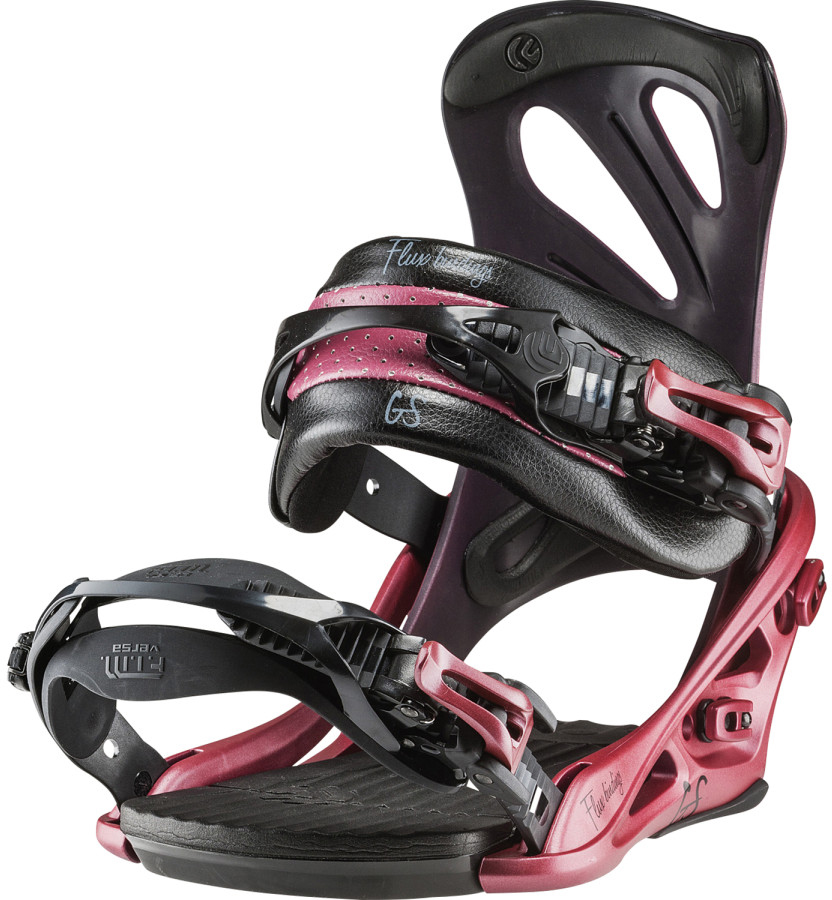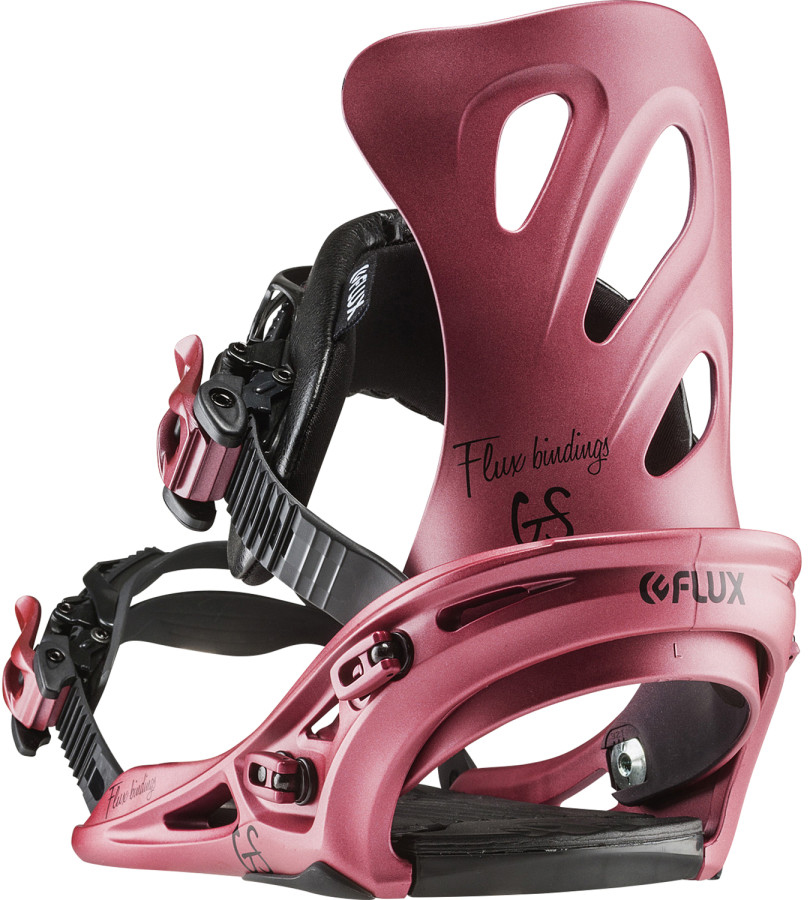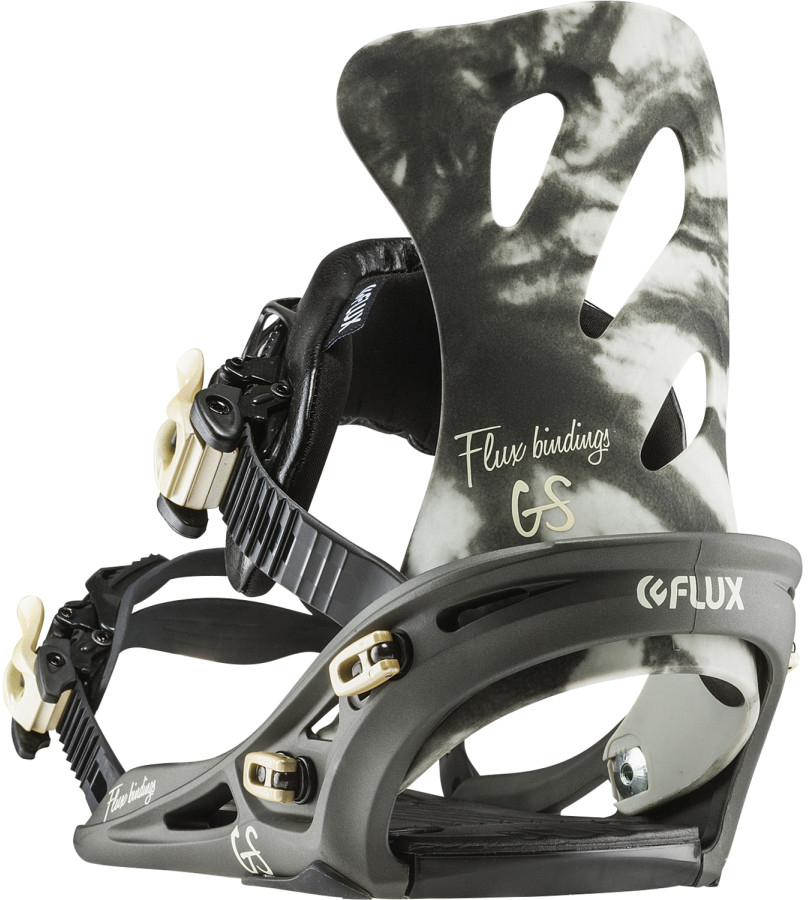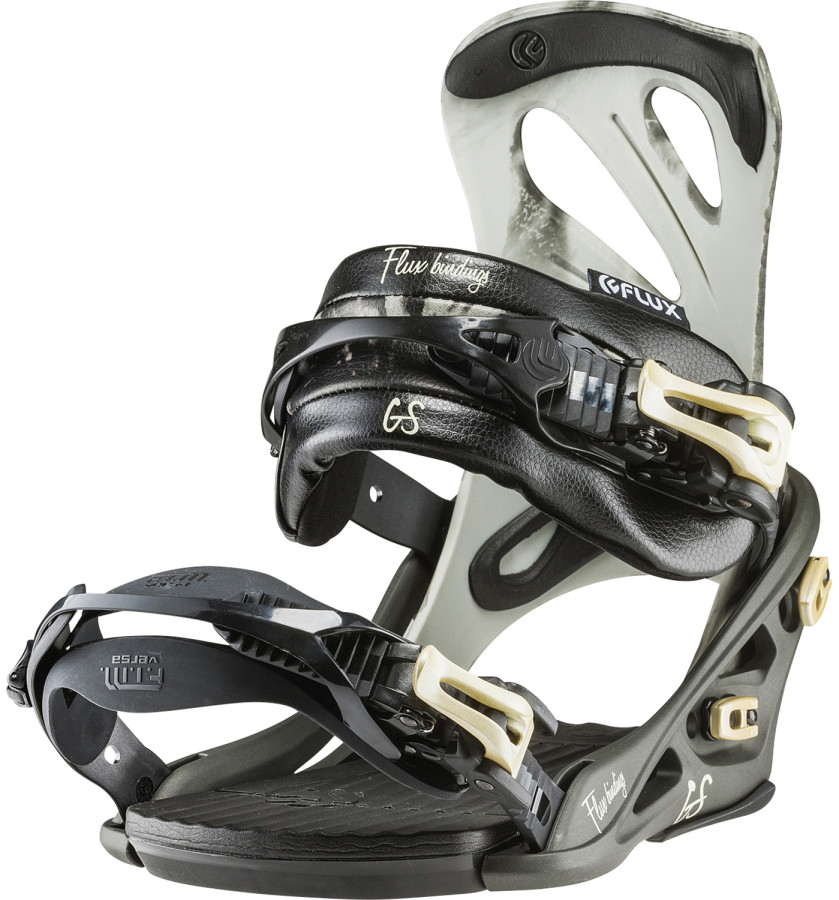
Flux SF45 Snowboard Binding Review |
|||||||||||||||||||||||||||||||||||
![]() |
|
||||||||||||||||||||||||||||||||||
Compare Prices & Buyer Reviews
The Good Ride TakeThe Flux SF45 (formerly called the Feedback) Snowboard Binding Review by The Good RideDays Used- 50+
The Flux SF45 competes directly with the Union Force SL, the Burton Diodes and to a lesser extent the Burton Diodes, Flux DMCC and Union Force MC. We feel of all the bindings the Burton and Unions have the best flex under foot. They do it in different ways but the result is the same. The Burton and Unions have the best Padding throughout the Base. The Diodes are the most responsive bindings in burtons line but have the smoothest turn initiation/least responsive edge to edge transitioning in this comparison. The Union Bindings have a more sharp/easiest turn initiation of all the bindings and the flux are second but have more of a smoother feeling like Burton's. When it comes to ankle support the Burton and flux could be argued either way as the most supportive but with the new ankle straps from the 2012 Union Force SL and Force MC a much closer second than before. Flux also is the easiest to adjust out of all the bindings.
Flex- This is a very stiff responsive binding. From 2010 to 2012 the Flex hasn't changed much at all. You can switch the asymmetrical high backs from left to right and vice versa to make for a more mellow flex which isn't a bad idea if you have a mellow and aggressive board.
Adjustability- These are very easy to adjust and also have a good amount of options to customize this to your boot. Almost the entire binding is tooless so it makes it pretty easy to adjust if your hands are warm. There are 3 holes for the binding angle and
Comfort- The flux SF45 has a very comfortable set up. We like how the ankle strap is inside the frame of the binding instead of outside. It makes for a more comfortable and responsive fit. Off the top of our head we cant think of any other company that does this. This is hard to explain but the ratchet system is incredibly easy to tighten. It feels like it tells you when you are securely tightened and stops you from cranking it too tight. Every part of the binding is purposefully constructed to work perfectly with each other part. The 2010 Flux Feedback had very durable straps but the 2011 strap material is plastic that isn't bonded to the material below. The performance is the same but it probably wont wear as well as the 2010 Feedback. There is a bit of a change to the 2012 ankle straps and toe straps. They lost some weight and usually lighter means more comfortable. All models are very comfortable but the 2012 has a slight advantage.
Response- Our first experience with these bindings was on the Never Summer SL and thought it might be overkill for an all mountain board but they were incredibly fun. When we put them on the Salomon Special and Salomon Burner we fell in love. So they will do very well on any aggressive board but will also perform rather well with any all mountain board. Later we put these bindings on some of our more aggressive freeride boards like the Arbor A Frame, Nidecker Platinum and Never Summer Raptor. The SF45 was quite at home with these incredibly stiff, super carvy, ultra bomber freeride boards while still feeling somewhat smooth compared to other bindings in there category. We had the most fun making big, hard fast turns and had a pretty good time in the half pipe as well. The gas pedals on the toe side are very responsive compared to our C60's and Co2's in 2010 and 2011. We feelt the same goes for the 2012 Burton Prophecy and Burton Diode.
Weight- For 2012 Flux got all south beach diet on all their bindings or they had binding lipo. The 2011 and 2010's are light but these are border line feather weight with the new tech. The Straps and base plate were stripped of weight without loosing any strength or support.
Lateral Movement- The ankle straps size from all years helps you flex the board for jibs and ollies but it's not the best for this. The new 2012 U shaped base plate could of had a better jib flex but they added something to on each side to increase stability at speed and edge to edge response. These aren't jib bindings so we like the choice Flux made.
Dampening and Shock Absorption- The base plate is very damp and makes you feel comfortable at any speed you have the ability for. We have noticed that the heel shock absorption is at the top of most flux bindings but it still doesn't compare to other bindings like Ride, some Unions and Burton. It still has a fiberglass/plastic base underneath the padding. We'd like to see the fiberglass/plastic base disappear under the heel portion of the bindings or at least see more padding and less base plate. However the toe has more shock absorption than almost any other binding out there with the exception of some of the 2009 and above Burton Est Bindings. For 2012 some improvements were made to make the base plate more shock absorption friendly but we'd still like to see more.
All in all we were very impressed with the smooth traditional feeling these bindings have and even though we don't have a lot of cash we added these bindings to our quiver. It would go well with an aggressive traditional cambered board like the Salomon Burner, Arbor A-Frame, Rome Anthem, Burton Custom X, the boards listed above and many other medium to stiff/aggressive boards out there. A Good Ride Take on Binding Tech This is a Good Ride breakdown for all you that are having a tough time choosing your bindings and what to make of the material you are looking at. Most bindings are Metal, Plastic or some combo of the 2. Metal Bindings have a lot of great aspects. Almost all-metal bindings are made from aluminum. Aluminum is great when it come to weight to stiffness ratio and also pretty durable. There is one key issue with metal/aluminum bindings; they transfer all the vibrations from the board right into your feet. This is the same principle that plague “bass-less” bindings, your feet got totally tired or fatigued. The newer generations have much better/damp bases so this problem has been minimized and in some cases eliminated. There are some companies that make great bindings despite the vibration issue with Aluminum. Some that come to mind are Ride and Rome. Plastic Bindings also have many great features but let’s address some technical stuff first. Most plastic bindings are really hardened glass plastic mix. The high-end stuff tends to have a more carbon, and carbon fiber added for extra stiffness and weight savings. Plastic bindings really dominate the market right now and most top bindings these days are mostly or all plastic. They can be really stiff and react well to your commands. The new bindings finally dialed in the carbon/ fiber integration to the point that the bindings will perform with the stiffness of metal and absorb more chatter. Most industry leaders have limited or completely eliminated metal from their bindings and we feel that with the materials used right now this is the future. Some mostly plastic companies that we feel rock are Burton, Flux and Union. What kind of binding should you buy? It’s a tough call. Both Plastic and Metal bindings offer freestyle, freeride and all mountain styles. At this point we feel that plastic bindings are edging out metal bindings when it comes to the very high end $300+ category. However it is a tough call in the below $300 category as to which material has the advantage.
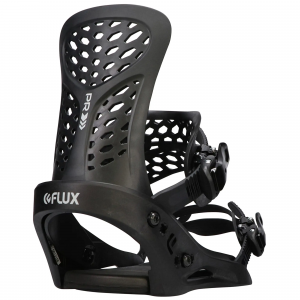
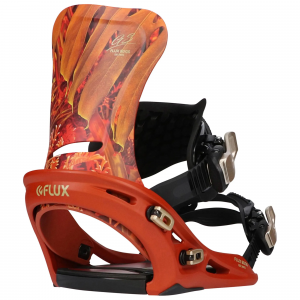
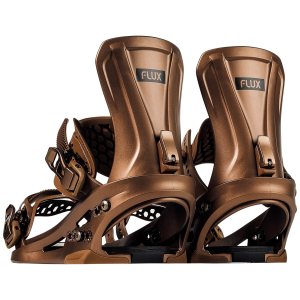
Company Info & SpecsFlux Feedback 2012SIZE:S,M,L COLOR:SILVER/GOLD GRADATION Team Tested. Shop Kid Approved. Capable of destroying pipes, parks, and powder, the SF45 is more versatile than a roll of duct tape. The asymmetrical Alpha Highbacks can be swapped with each other to fine tune the flex of the bindings for either freestyle mayhem or freeriding madness. The Ratchet Pivot System also allows you to adjust the position of the Absolute Fit straps to find the perfect blend of responsiveness and tweakability. Its legendary design and durability have long made the SF45 a team favorite of shred technicians like J.P. Solberg, Eric Willett, and Jake Koia. CONSTRUCTION? BASEPLATE
|
|||||||||||||||||||||||||||||||||||
.