Positives
- More Traditional Boot / Binding Feel
- Better Lateral Flex
- Stiffer Than Before
Negatives
- Ankle Hammock Causes Pressure Points
- Flex Retention is Questionable
- Still Pretty Soft
- Limited Ankle Support
Summary
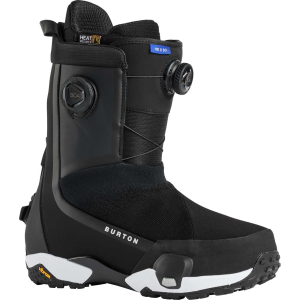
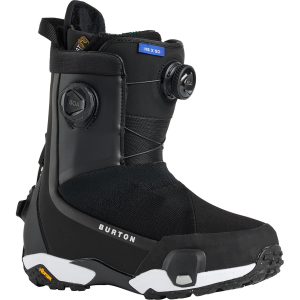
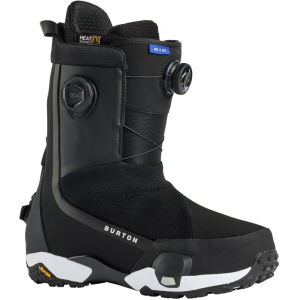
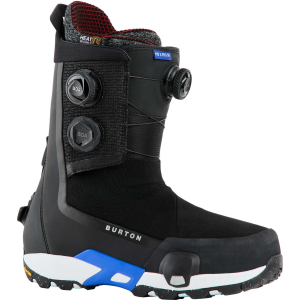
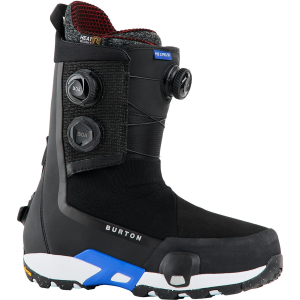
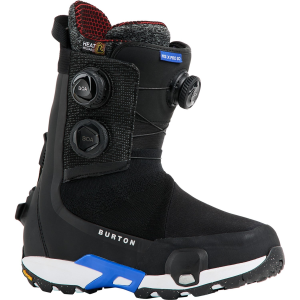
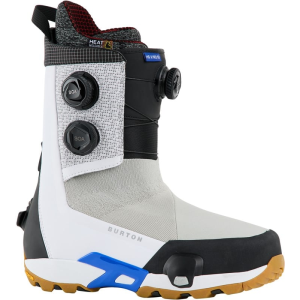
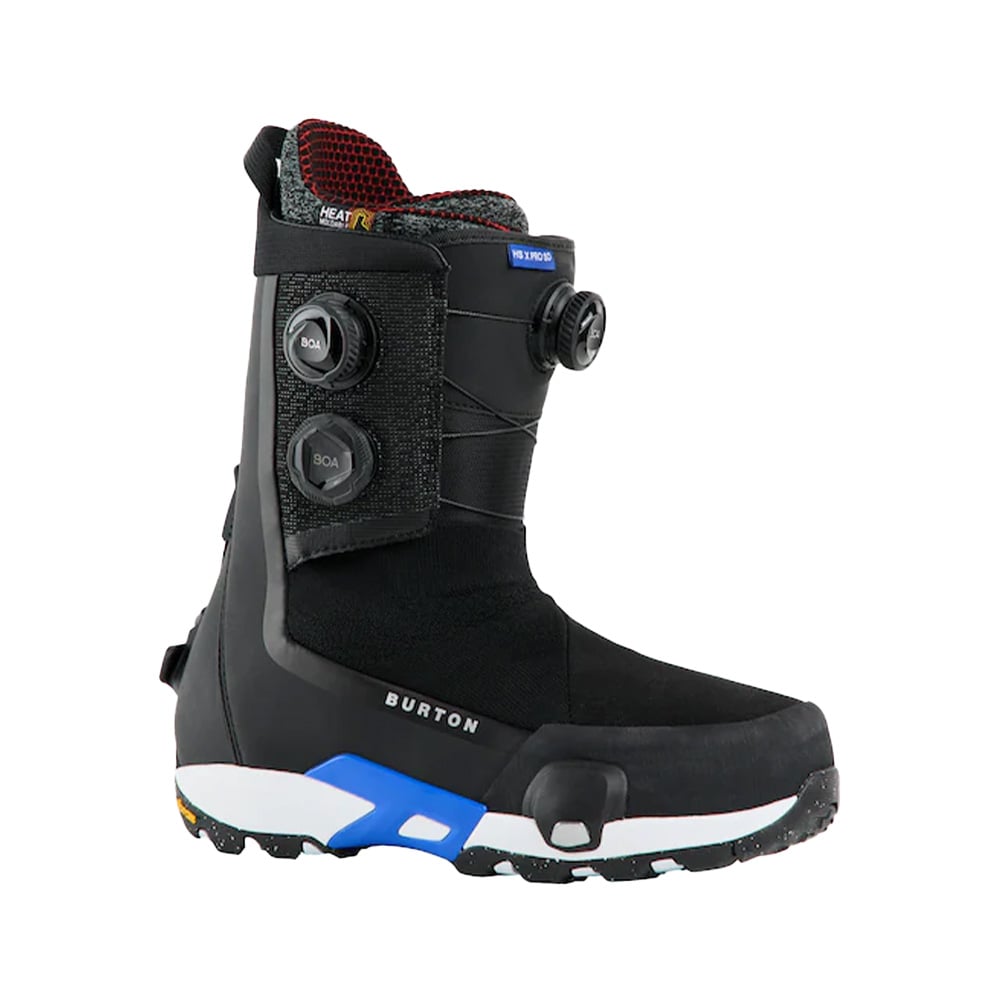
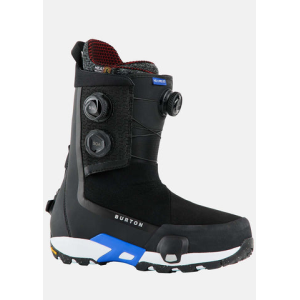
The Burton Highshot X Step On 2027 has some changes, with some positives and negatives. It stiffened up considerably from very soft to medium-soft. Burton went from Upper/Lower Double BOA to Inner/Outer Double BOA with the large blue internal ankle harness, which, for some, can cause pressure points. It doesn't have a very symmetrical response. There's still that good lateral flex from tip to tail. And it has a more traditional snowboard-boot feel than the first-generation Step On boots.Where To Buy
No obligation, but these links support the site.
Blauer Board Shop
Sun & Ski
The-House
Evo
Tactics
Backcountry
Blauer Board Shop

Sun & Ski Sports
evo
REI

Tactics
Stoked Board Shop


PRFO Sports Canada
| Riding Level | Beginner - Expert |
| Lacing Type | Double BOA |
| Manufactured in | |


|
|
|
|
|
|
|
|

|
|
|
|
|
|
|
|
|
|
|
|
|
|
|
|
|
|
|
|
|
|
|
|
|
|
|
Where To Buy
No obligation, but these links support the site.
Blauer Board Shop

Sun & Ski Sports
evo
REI
Tactics
Backcountry
The House
Stoked Board Shop
PRFO Sports Canada
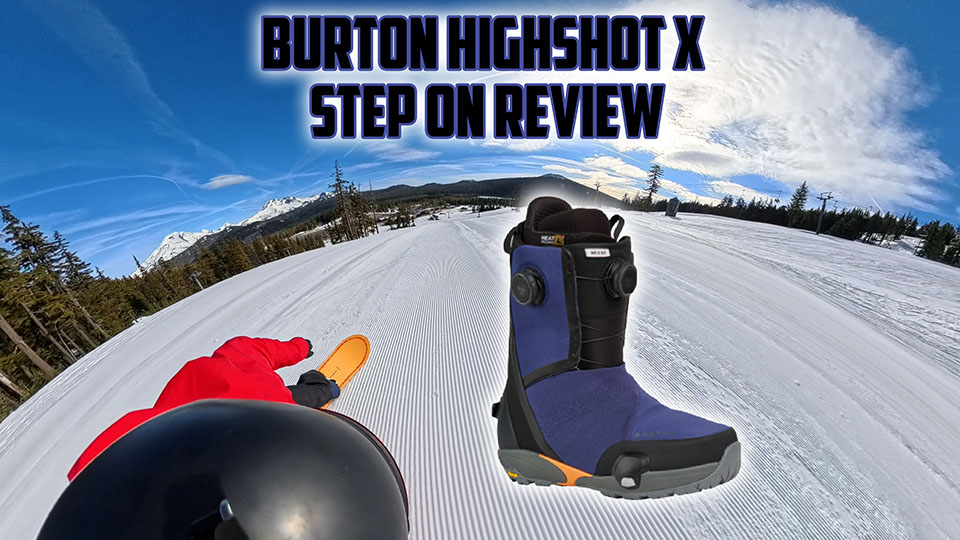
A Detailed Breakdown of the Burton Highshot X Step On Snowboard Boot Review by The Good Ride
How the Burton Highshot X Step On Snowboard Boot Was Tested:
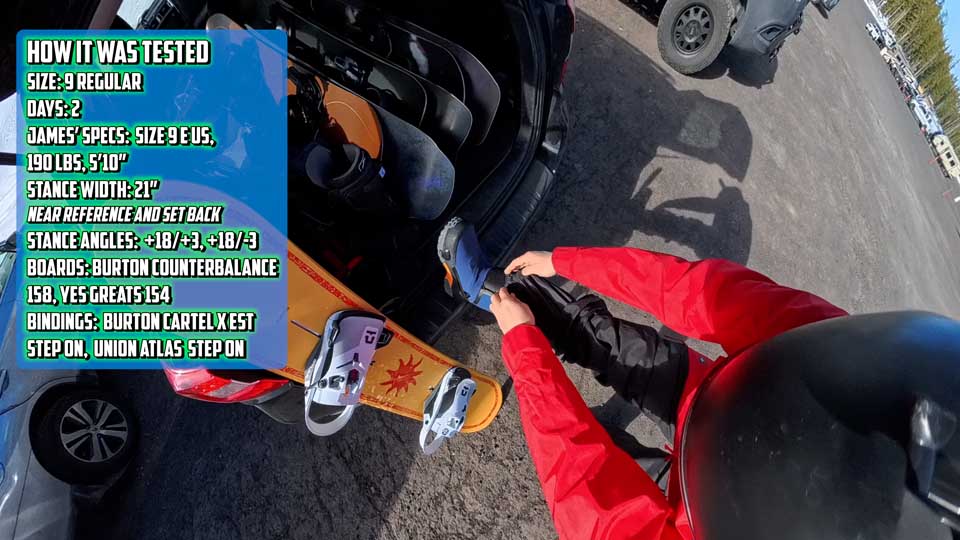
I borrowed the Burton Highshot X Step On for a demo and sent it back. I rode these two days. On the same days I tested these boots, I compared them against my Nitro Profile Step On TLS boots. Conditions were like they were most of the year. I had spring-like conditions with firm in the morning, going to medium soft to pretty soft in the afternoon.
Size: 9US Regular
Days:2
Conditions: Mostly Varied Spring Conditions
Riders: James (Size 9 E, 5’10”, 185-190lbs). I’ve tested and compared 850+ boards, 200+ bindings, and 120+ boots
Insoles: F.I.T. Gamechangers
Redundancy: Strapins in case boots or bindings break.
Jacket: Skyline Fuse Jacket, Jones Mtn Surf Anorak
Pant: Skyline Fase 3L Bib Pant, Skyline Faze Pant, Jones Mountain Surf Pant
Helmet: Smith Method, Smith Scout
Goggle: Smith 4D Mag Low Bridge Fit
Gloves: Burton AK Clutch Mitt, Burton AK Tech Leather Glove
Bindings:
Union Atlas Step On, Burton Cartel X EST Step On
Boards:
Burton Counterbalance, YES Greats
Similar (but not the same) Boots:
Burton Photon Step On, Burton Ion Step On, Nitro Profile Step On
James’ Foot Specs
Foot Size: 9 US
Foot Width: E
Arch Length: Right 9.5 and Left 9
Instep: (left and Right) 10.5.”
Calf Circumference: Top of boot 17” & Bottom of boot 12.”
Ethics Statement
I was not paid to write this review, and it reflects an honest, objective perspective with no brand oversight. If this review helped, we’d appreciate it if you support objective content by:
- Buying Through Our Sponsor, Blauer Board Shop
- Buying through our other Where To Buy Links, we get paid a small commission if you do. Please make sure we are the last click and don’t use a coupon or discount provider. They take our commission if you do.
- Become a Patron and get early access to reviews well before publication. https://www.patreon.com/thegoodride
- Donate to https://venmo.com/TheGoodRide (@TheGoodRide) or https://paypal.me/thegoodride
- Follow Us: https://www.instagram.com/thegoodride
- Like & Subscribe on YouTube https://www.youtube.com/@thegoodridesnow
Weight
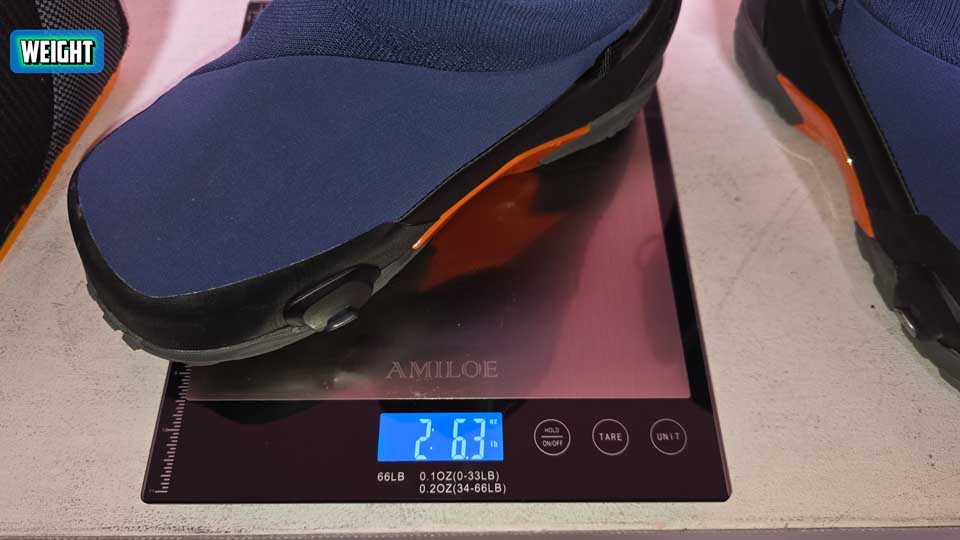
Let’s talk weight. These are 2 Lbs 6 Oz, which is on the lighter side for a snowboard boot. But then you can pair it with something like the cartel X Step On s t at 1 Lb 9 Oz. That’s excessively light. You have a very light overall package. But even if you pair it up with the Union Atlas, Step On at 1 Lb 15oz, you’re still getting a very light set up because that’s a very light binding.
Fit/Liner
Burton dialed in the fit of the Highshot line a little bit better. This felt more true to size, like Burton boots usually do. Maybe a quarter of a size too large, but definitely doable. And with this thinner liner, it’s not going to pack out as much as normal Burton liners do.
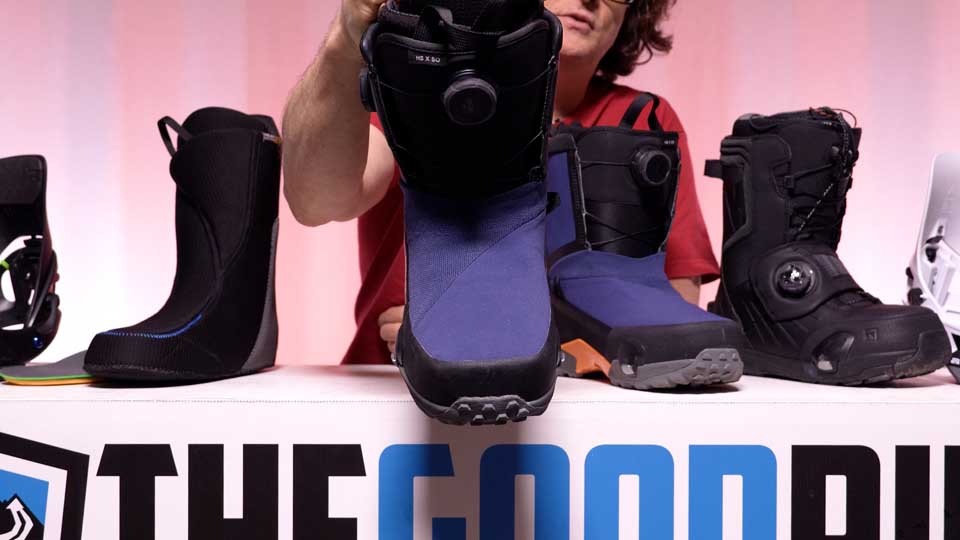
Now I’m a 9, but I’m an E width, and while this Step On boot is wider around the toe box than it used to be compared to the Photon, the Ion, and other Burton’s first-gen Step On boots. I still would definitely prefer the wide. And that’s a much better fit for my E with feet.
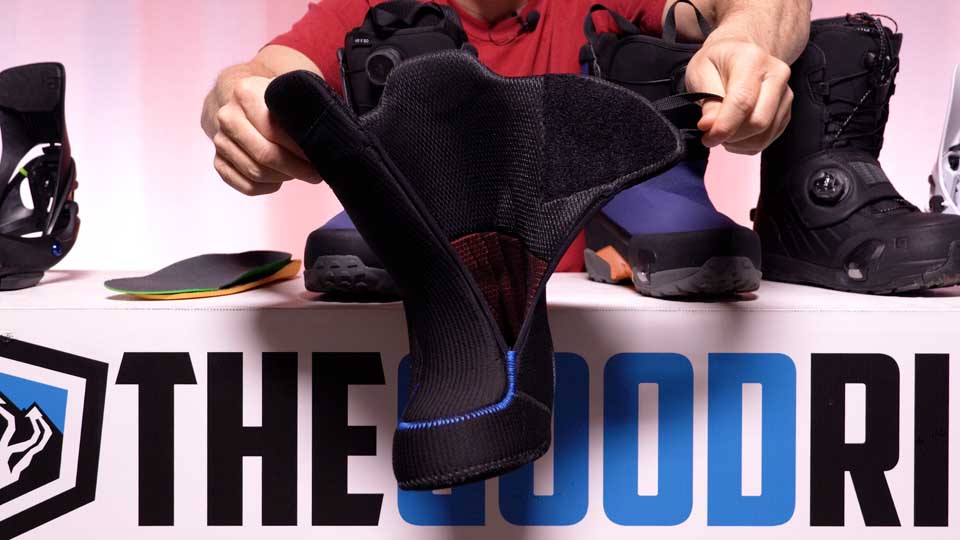
Unfortunately, this year there aren’t spots for the Burton J bar inserts, so if you’re narrow, you’re going to have to rely on boot fitting foam that you’re going to have to put on the outside or the inside of the shell. There’s no more Velcro connection with the Burton J bars. And while this liner is thinner, you still can heat mold it pretty well and dial out your fit a little better. A lot of people don’t do that, and they should. It really helps.
Insole
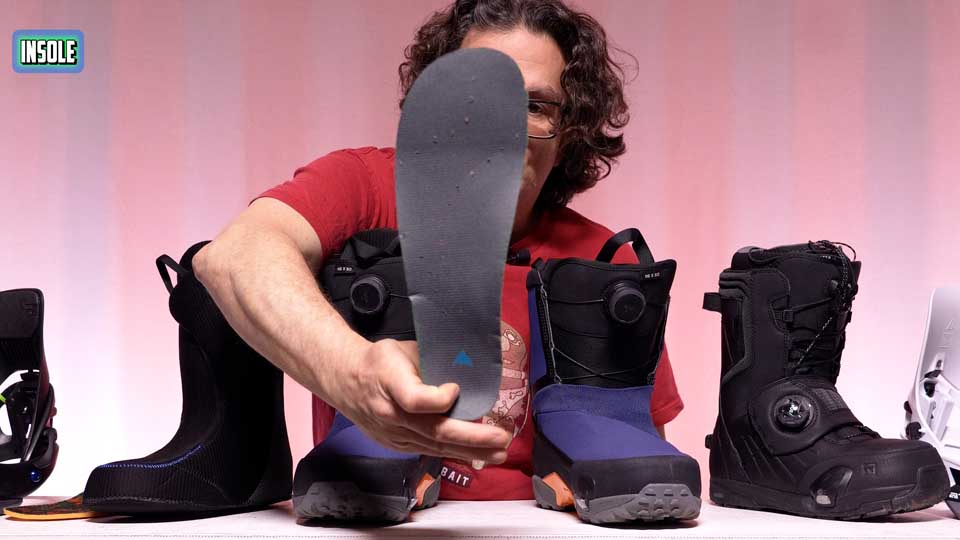
Burton has a very standard insole here. There’s nothing special about it.
You’d do very well to upgrade to something like this, a new Footprint Game Changer. With gel over the metatarsal and in the heel. It’s a very soft, flexible, but very supportive, heat-moldable insole. It’s been my favorite lately and what I’m going to be riding through the 2026 and 2027 seasons, and it’s the one I rode at the end of the 2026 season when I started testing these boots.
Adjustability/Lacing System
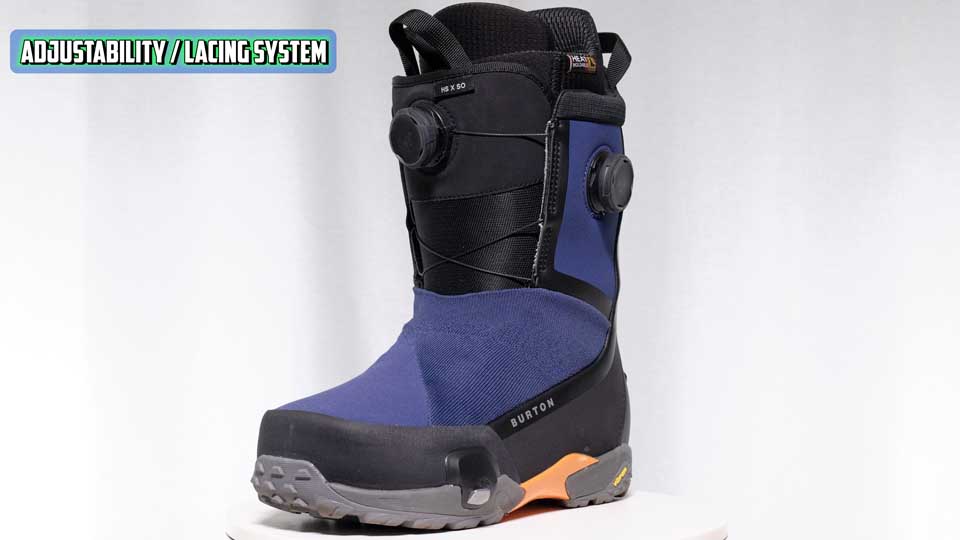
The Burton Highshot X Step On’s change to an inner/outer BOA system with no upper/lower adjustability is a bit of a heartbreak for me. That’s a huge deal breaker because I can never get a single BOA properly tight on the outside. Some people can. Some people like me can’t. It always leaves one area too tight and one area too loose. And then the tightness can move from one area to another
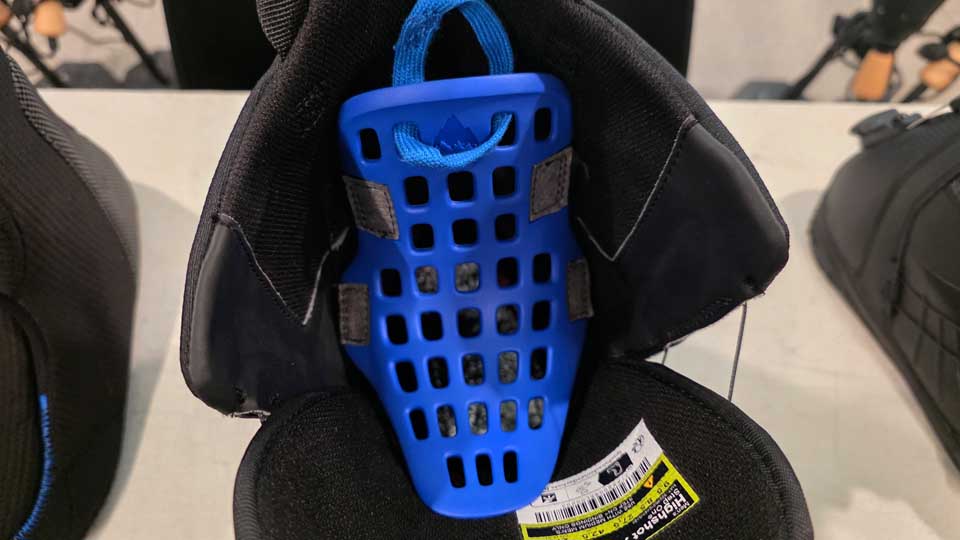
Then that internal ankle harness, no matter how I tightened it, stiff, medium, or soft, caused pressure points. And it folded over, putting a lot of pressure on the top of my foot. Right where you don’t want it and right where you shouldn’t have it on Step On because you’re not using an ankle strap, and it shouldn’t cause any pressure points.
What I really wish they would do is instead of making an internal ankle harness that starts mid foot and then goes almost all the way up to the BOA, they instead mimicked one of their Burton ankle straps attached it to the outside of the tongue and created an internal BOA so it wouldn’t be sticking out, and it wouldn’t pop out like this does, but instead it would be permanently attached to the tongue like this with more support on the outside, less in the middle. And it would emulate what a binding ankle strap would do. Give you more support
Right now, all this blue ankle harness does is prevent heel lift. But it does not help with support or response. As much as I believe it should.
H5 BOA
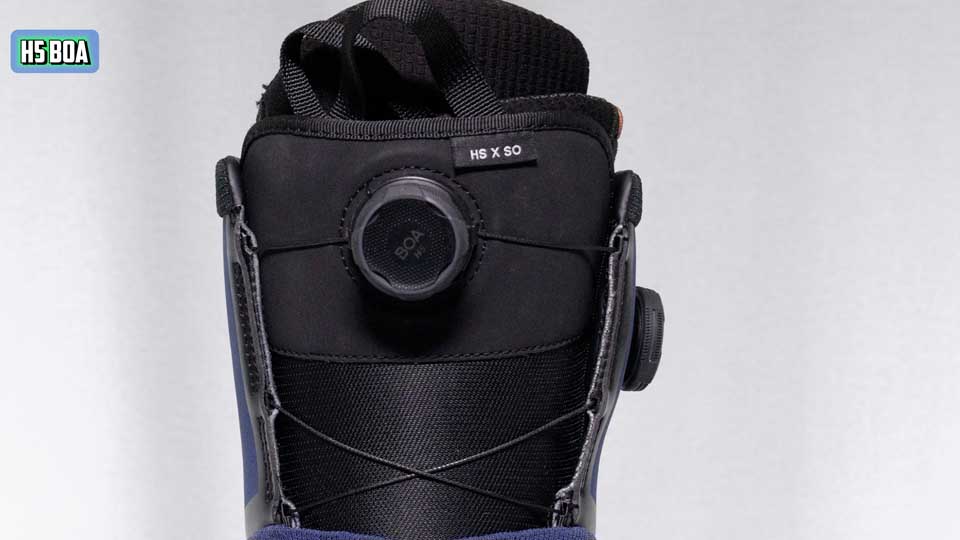
The 202y Line of Burton boots is now using the new H5 BOA coil here. And it’s different from the old BOAs. They turn differently. You can micro-adjust now, so when they’re loose, it’s still a pain in the ass to get them tight. There are lots of cranking, but now if you go a little too far, you don’t have to pop like you used to. All you have to do is dial back. It sounds a little funny. It sounds like they’re broken, but they’re not. And neither BOA turns the same way. You turn them toward each other to tighten, then turn them away to loosen. And the same goes for the other BOA as well.
Flex & Response
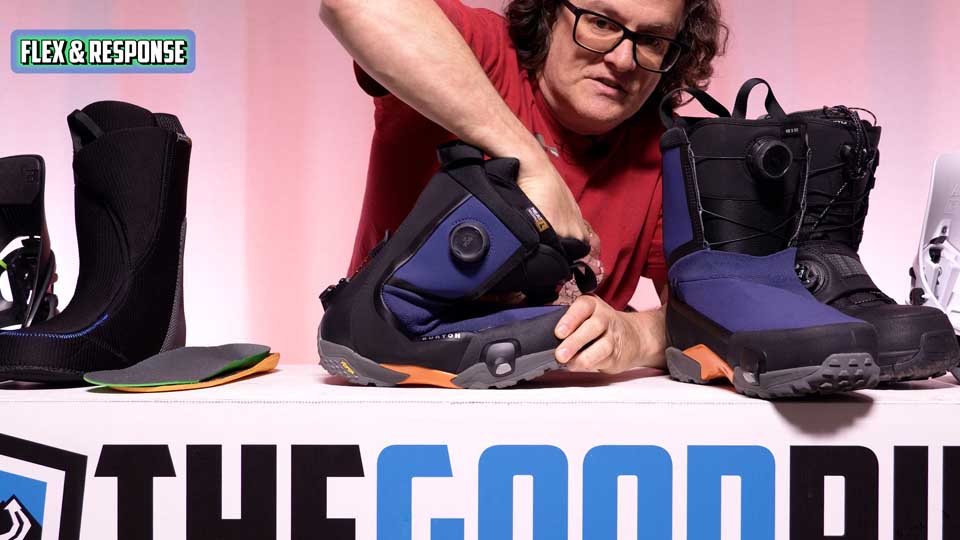
You can see the Burton Highshot X Step On is still soft, but it took a lot more work for me to get it to this point. I would say it’s probably medium, bordering on medium-soft. I would say more on the medium soft side, but it’s definitely an improvement. I still think they could go further, especially right here. I’d love to see a stiffer flex right in this tongue area to give more ankle support, but also help with symmetry in response, because what I’ve found is while it’s very responsive for how soft this flex is, because of that Step On technology that connects with the high back and really turns it quickly edge to edge, but it’s slower on the toe side and faster on the heel side.
I’d love for them to work on making this turning experience more symmetrical now with some Step On bindings. I believe you can change out this high back to basically a low back, and that would definitely improve symmetry. So it might be worth looking into, because the response is so extensive that you don’t really need an extra response in the back. And I’d love to see them experiment with some low back options because of that.
Flex Retention
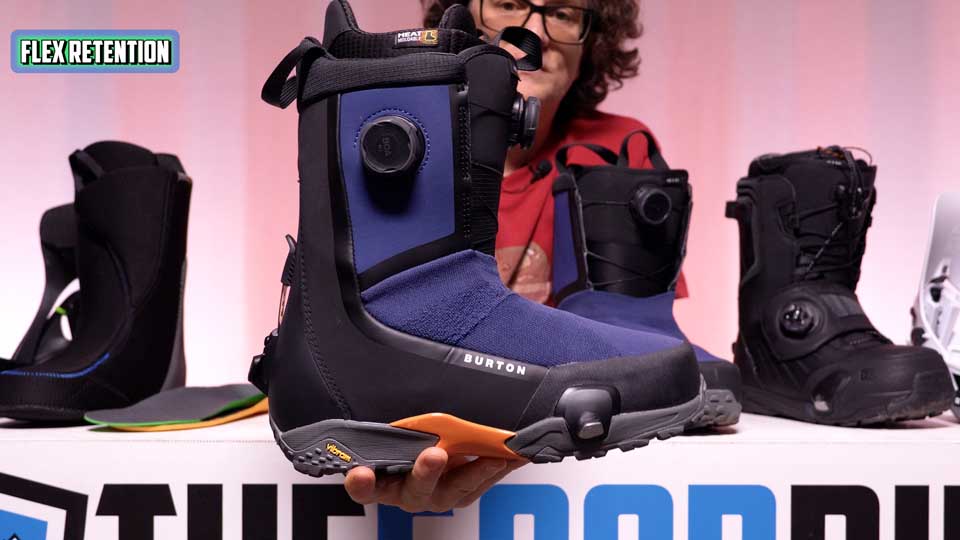
The Burton Highshot X Step On has less flex retention than in past years. It looks like there’s an articulating cuff. But now this is sewn together. So there is shell distortion on a forward flex. You do have a stiff back stay, and the liner has some reinforcement. But that’s not enough to preserve this flex, I would say, in ten plus days, this is going to start getting a lot softer. So this isn’t the ideal boot for that 100-day-a-year rider.
Durability
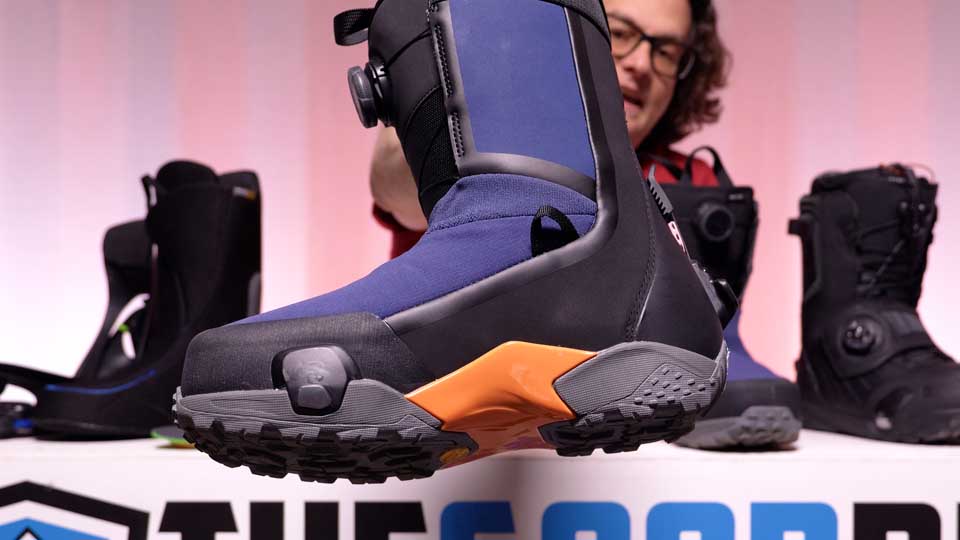
The durability of the Burton Highshot X Step On is ok. They have done some good things, like putting rubber throughout the toe. Then they did almost like a laminate on the outside, and then some harder rubber. So you are going to protect this boot pretty well around the sides, but it doesn’t feel super durable.
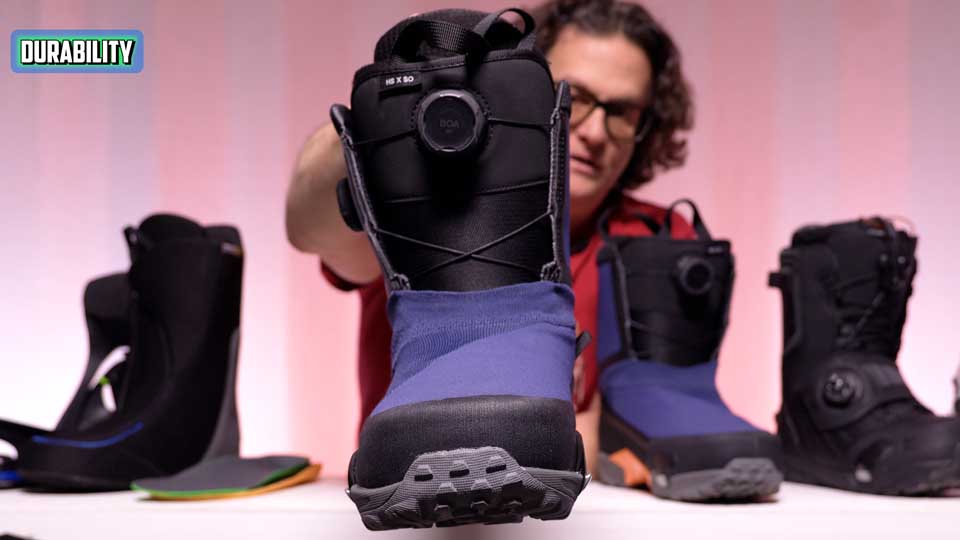
And one thing I’ve mentioned with all the Highshot and Waverange boot reviews is that this cover here will have to be cut off if you need to repair this outer BOA.
Shock Absorption / Board Feel
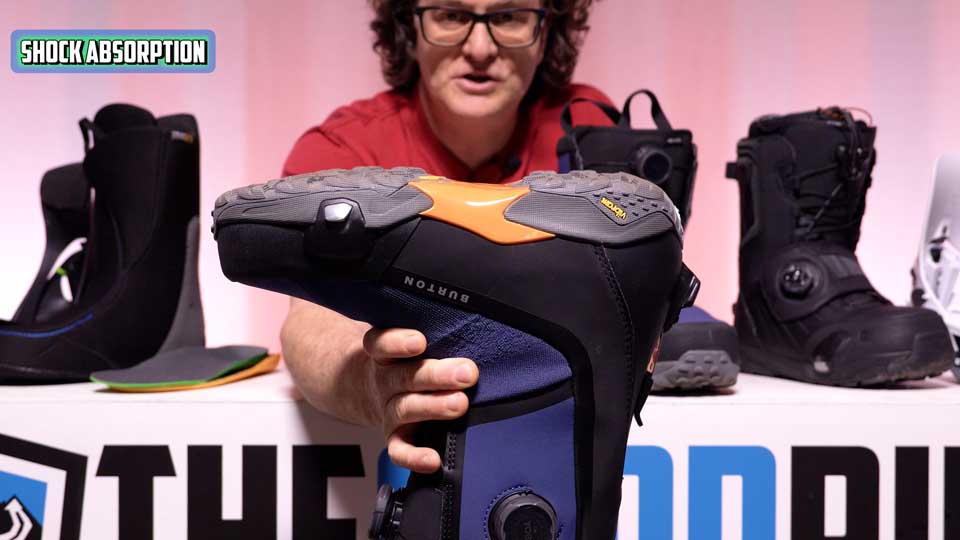
The Burton Highshot X Step On doesn’t have great shock absorption, you don’t have much here. It looks like there’s a lot more than there is, but there is considerably less shock absorption. than my Nitro Profile Step On TLS That had much better shock absorption. But on the positive side, these Step On bindings every single one of them has a ton of EVA foam. So I didn’t really miss the shock absorption once I stepped in. But there is a better board feel than first-gen Burton Step On boots, as well as the Nitro profile and Venture Step On and team Step On boots.
Traction
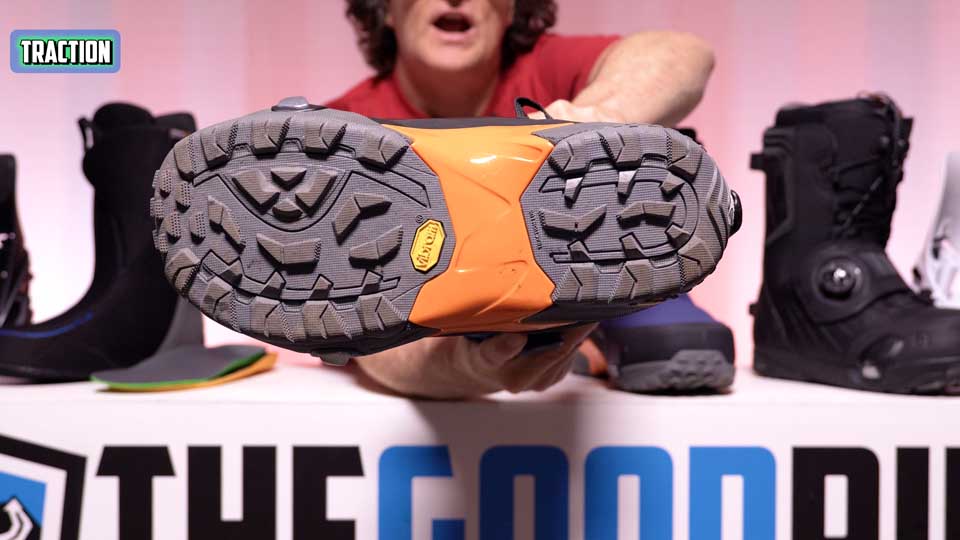
The Burton Highshot X has excellent traction with the Vibram soles, and it doesn’t change with the weather. If it gets really cold, you still have a lot of traction.
Footprint
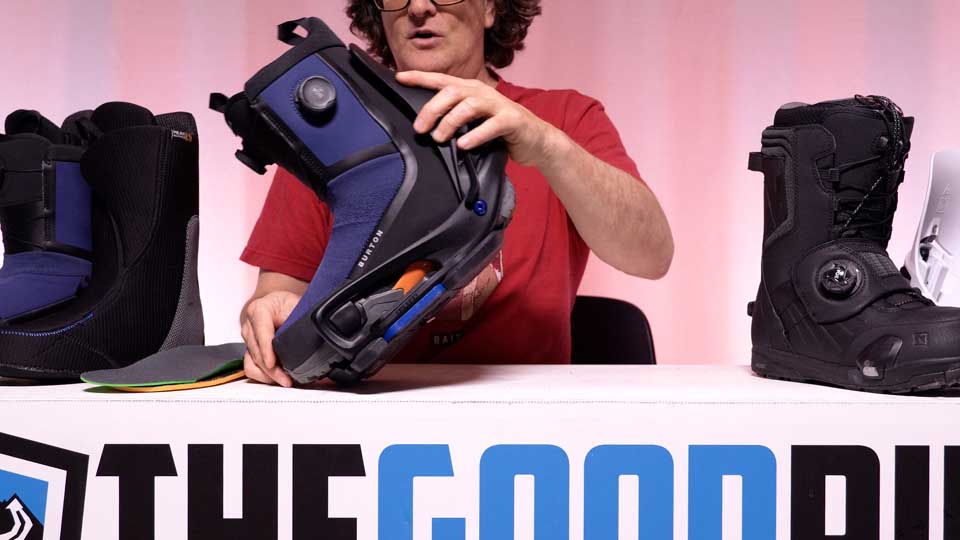
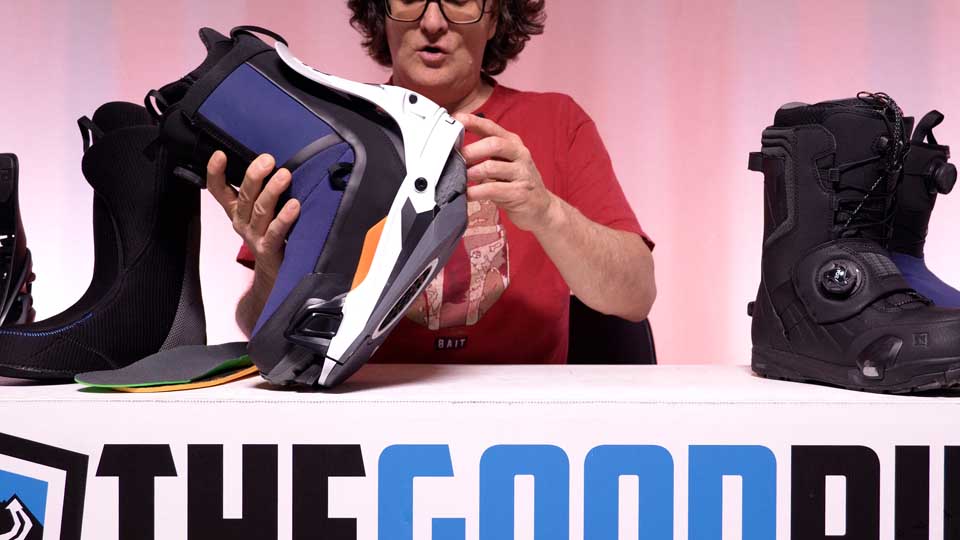
The Burton Highshot X footprint is still very reduced. It is about 29.7cm long and it helps with toe drag. Heel drag is another story though.
Heel Drag With Step On
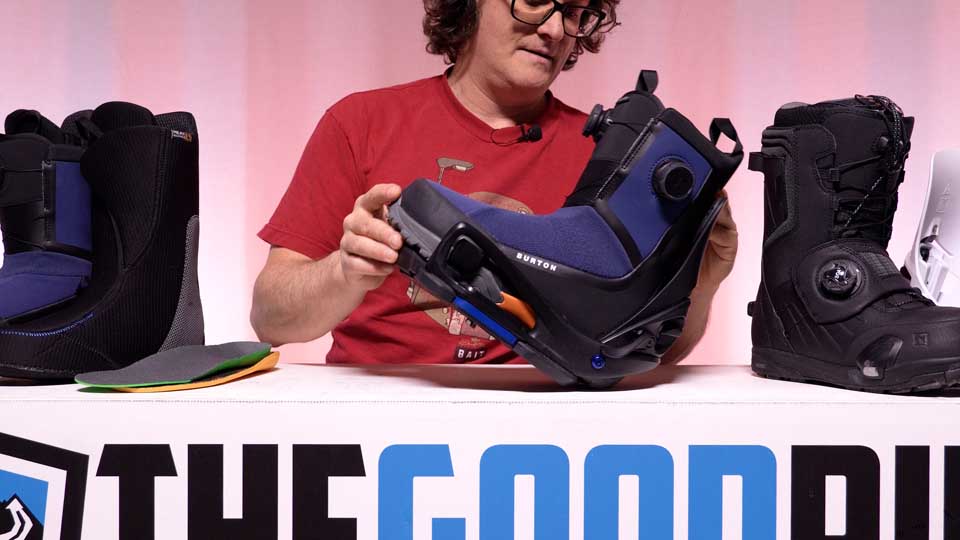
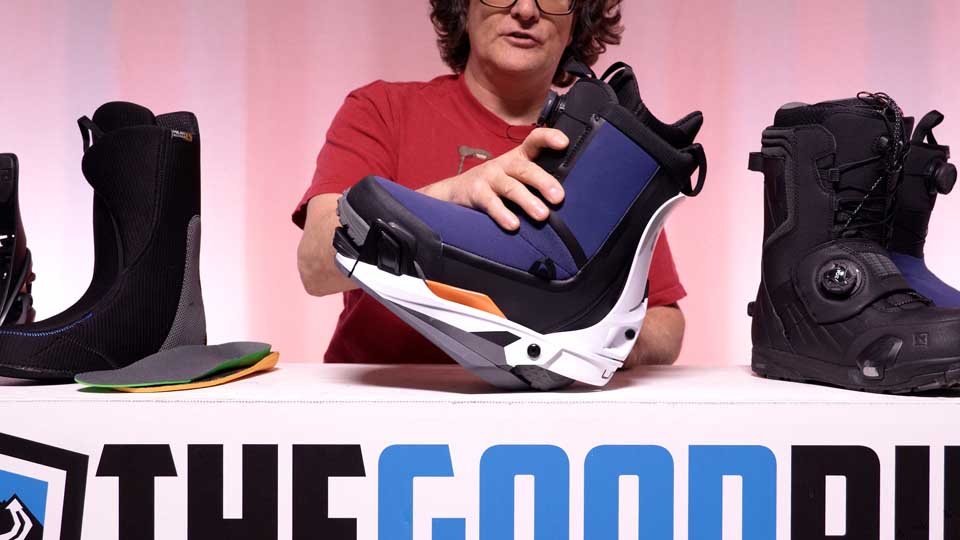
So with all Step On, there’s always more overhang with the high back than the toe. So when you lean to a heel-side carve, you only have that much, but the toe-side carve can go much further. The same goes if you’re using Burton bindings. It boots out very quickly, but the toe can go much further.
BindingsIt’s funny, though. The Union Atlas appears to show more overhang, but there is actually less. So if you’re going to carve with these, make sure your board is wider than it should be for your boot size. Most carvers already do that, so you should be okay. However, these aren’t really the boots you want If you’re a really hard carver. If you’re really passionate about carving, I would suggest just going with regular bindings or Flow bindings because there is very little overhang on the heel side.
Warmth
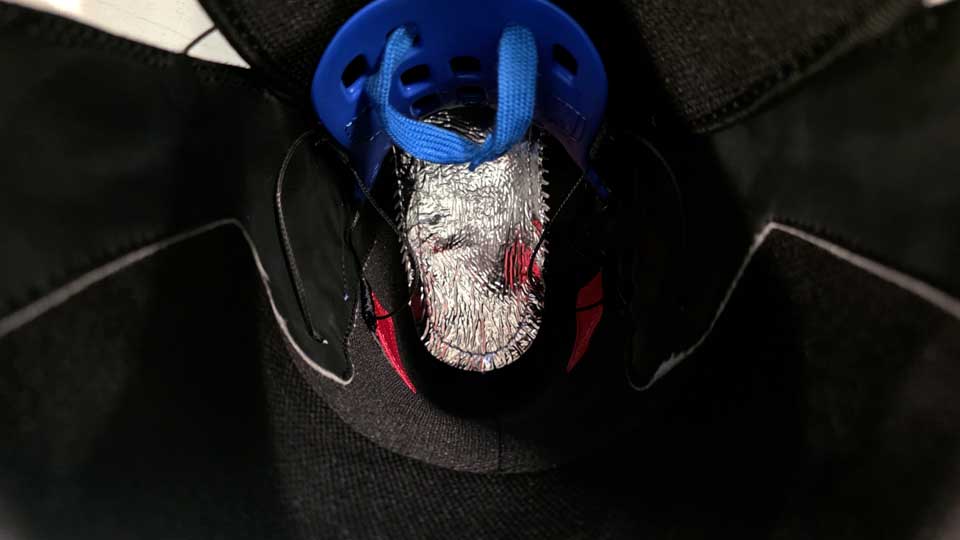
And when it comes to warmth, I couldn’t really stress test this in super cold conditions, but they seem warm enough. They have that little thermal enhancement on the bottom that looks like tin foil.
Final Thoughts
So as it stands right now, it’s hit or miss with that internal ankle harness. Some people don’t mind it at all. Some people like me have lots of pressure point issues with it. So I strongly suggest you go try these on first before you buy, But I do like the fact that they were able to stiffen this up while still keeping a lot of that lateral flex. and they’re giving these boots more of a traditional boot feel with a little less response in a softer flex that can still turn just about any board out there. So there are some positives to you just have to figure out. If you can get past some of the negatives.
Burton Highshot X Step On Specs
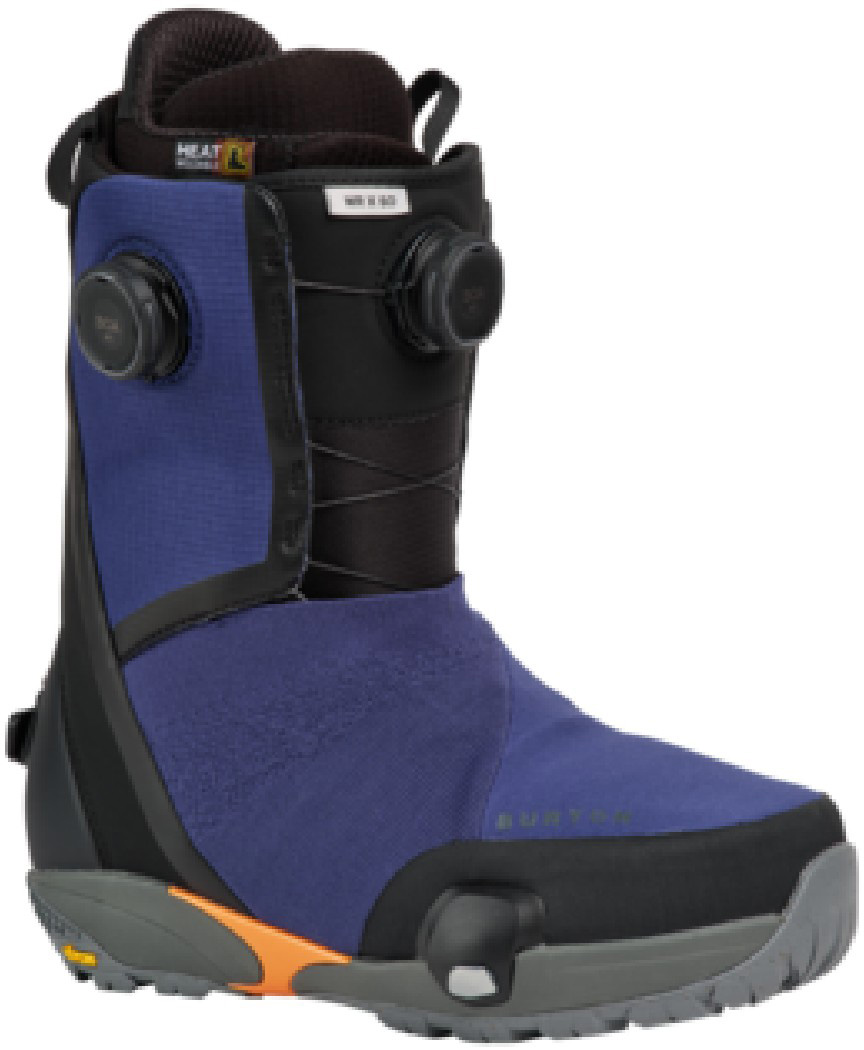
Burton Highshot X Step On Images
We try to get as many images of the Burton Highshot X Step On, but forgive us if they're not all there.
2027
Burton Highshot X Step On User Reviews
Where To Buy
No obligation, but these links support the site.
Blauer Board Shop
Sun & Ski
The-House
Evo
Tactics
Backcountry
Blauer Board Shop
Sun & Ski Sports
evo
REI
Tactics
More stores to buy from:
Blauer Board Shop
Sun & Ski Sports
evo
REI
Tactics
Backcountry
The House
Stoked Board Shop
Stoked Board Shop
PRFO Sports Canada
More stores to buy from:
PRFO Sports Canada
Blauer Board Shop
Sun & Ski
The-House
Evo
Tactics
Backcountry
Blauer Board Shop
Sun & Ski Sports
evo
REI
Tactics
Stoked Board Shop
PRFO Sports Canada
Where To Buy
No obligation, but these links support the site.
Blauer Board Shop
Sun & Ski
The-House
Evo
Tactics
Backcountry
Blauer Board Shop
Sun & Ski Sports
evo
REI
Tactics
More stores to buy from:
Blauer Board Shop
Sun & Ski Sports
evo
REI
Tactics
Backcountry
The House
Stoked Board Shop
Stoked Board Shop