Positives
- More Response Than The Flex
- Excellent Board Feel
- Very Reduced Footprint
- Minimal Bulk
- Very Durable
- Good Flex Retention
Negatives
- Side BOA Can Pop Off with Highback Rotation and Forward Lean
- Minimal Shock Absorption
- Memory Foam Liner Too Thin
Summary
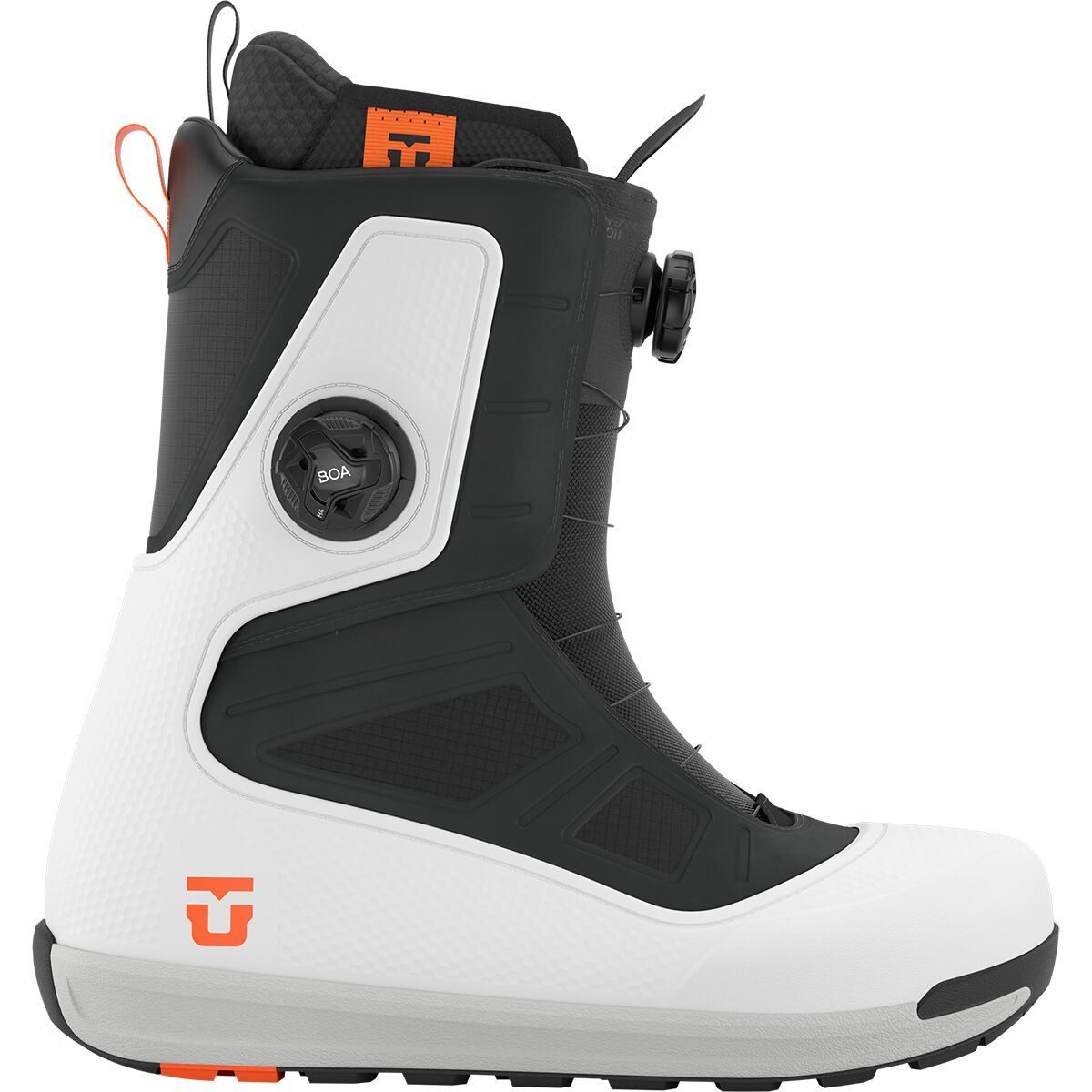
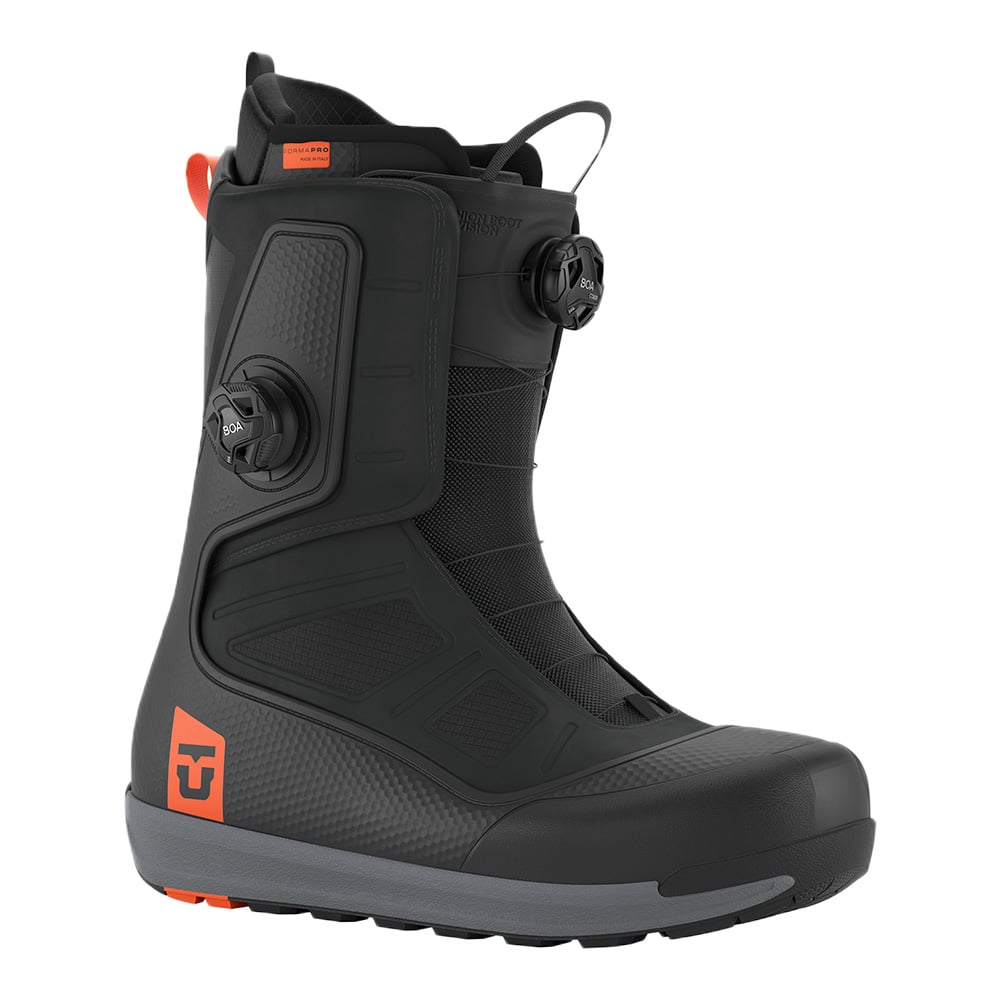
The Union Reset Pro is new for 2026 and definitely has some positives and negatives. The liner is a little thin and doesn't protect you from the shell as much as it should. The side BOA is really low on the boot. So if you like forward, lean, and you rotate your high backs, you'll pop this BOA right off. It doesn't have much ankle articulation, causing shell distortion. But it has incredible board feel and a very unique kind of response. Despite the lack of ankle articulation, there is a plasticky, rubbery type of shell that retains the flex longer than you would think.Where To Buy
No obligation, but these links support the site.
Blauer Board Shop
Sun & Ski Sports
Evo
Tactics
The-House
REI
Backcountry
Blauer Board Shop

Sun & Ski Sports

evo

REI

Backcountry

Stoked Board Shop

PRFO Sports Canada
| Riding Level | Beginner - Expert |
| Lacing Type | Double BOA |
| Manufactured in | Italy |


|
|
|
|
|
|
|
|
|
|
|
|
|
|
|
|
|
|
|
|
|
|
|
|
|
|
|
|
|
|
|
|
|
|
|
|
Where To Buy
No obligation, but these links support the site.
Blauer Board Shop
Sun & Ski Sports
evo
REI
Backcountry
Stoked Board Shop
PRFO Sports Canada
An Honest Objective Breakdown of the Union Reset Pro Review by The Good Ride
How The Union Reset Pro
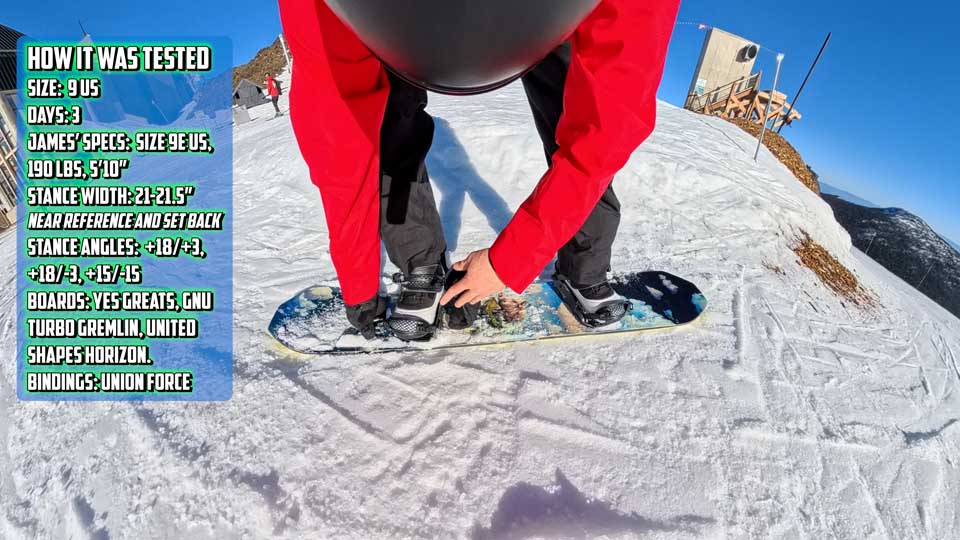
Was Tested:
Precious Good Ride dollars were spent to buy this and review it. I got this out for three days and compared it against my daily driver, the Nitro team. BOAs. The battalion salsa BOA and the Nidecker Rift Pro, I have an extensive comparison of those boots up on Patreon for paid members, so check that out if you want to know the differences. I’m mainly going to focus on this because there’s a lot to talk about, along with Dave as well.
Size: 9 US
Days: 3
Conditions: Not the best snow. It was a tough winter but firm and edgeable.
Riders: James (Size 9 E, 5’10”, 185-190lbs). I’ve tested and compared 850+ boards, 200+ bindings, and 120+ boots
Davey (Size 12, 240lbs, 6’4”)
Insoles: F.I.T. Gamechangers
Redundancy: Strapins in case boots or bindings break.
Jacket: Skyline Fuse Jacket, Jones Mtn Surf Anorak
Pant: Skyline Fase 3L Bib Pant, Skyline Faze Pant, Jones Mountain Surf Pant
Helmet: Smith Method, Smith Scout
Goggle: Smith 4D Mag Low Bridge Fit
Gloves: Burton AK Clutch Mitt, Burton AK Tech Leather Glove
Bindings:
Boards:
Similar (but not the same) Boots:
Nitro Team BOA, Nitro Team TLS, Nidecker Rift Pro, Bataleon Salsa BOA, Ride Torrent, Ride Fuse, Ride Deadbolt, Vans Infuse, Burton Ion
Ethics Statement
I was not paid to write this review, and it reflects an honest, objective perspective with no brand oversight. Actually, this is one of, if not the only honest, objective reviews of this boot out there. Most “reviews” you see are by people who are sponsored or are paid to promote the boot. If this review helped, we’d appreciate it if you support objective content by:
- Buying Through Our Sponsor, Blauer Board Shop
- Buying through our other Where To Buy Links, we get paid a small commission if you do. Please make sure we are the last click and don’t use a coupon or discount provider. They take our commission if you do.
- Become a Patron and get early access to reviews well before publication. https://www.patreon.com/thegoodride
- Donate to https://venmo.com/TheGoodRide (@TheGoodRide) or https://paypal.me/thegoodride
- Follow Us: https://www.instagram.com/thegoodride
- Like & Subscribe on YouTube https://www.youtube.com/@thegoodridesnow
2027 Union Reset Pro
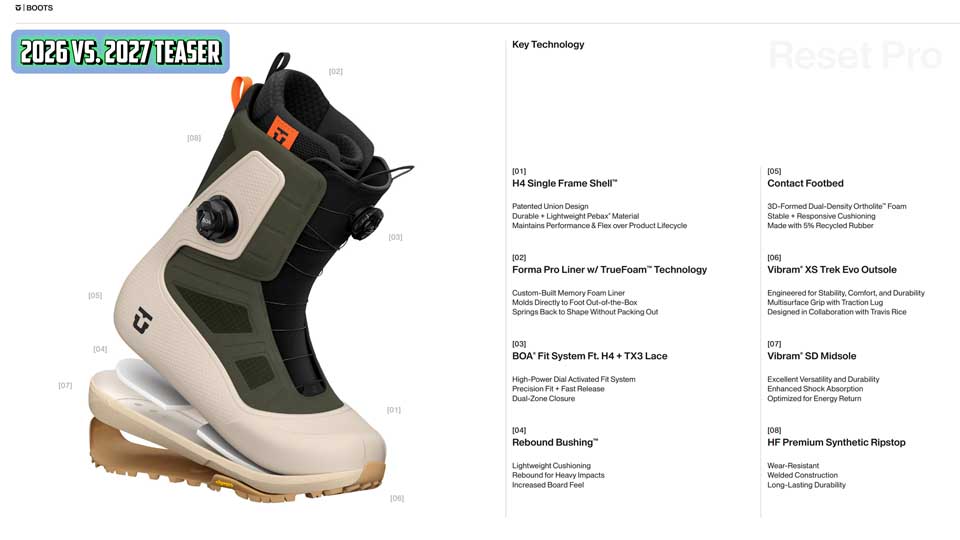
And to give you a little teaser for 2027, not much has changed. It’s even keeping the H4 BOA, where many brands are going to H5. But they have gone with Vibram Soles, which have a Vibram midsole, which drastically improves traction. I’m not sure about shock absorption, but I’m looking forward to trying that new sole when they have a sample available.
And it looks like the sole from the 2026 Reset Pro has been passed down to the reset and factory.
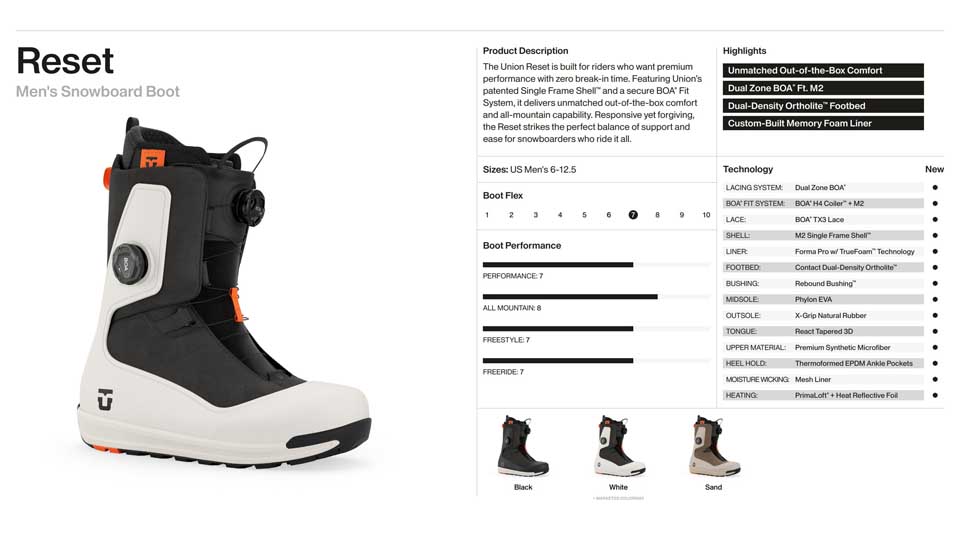
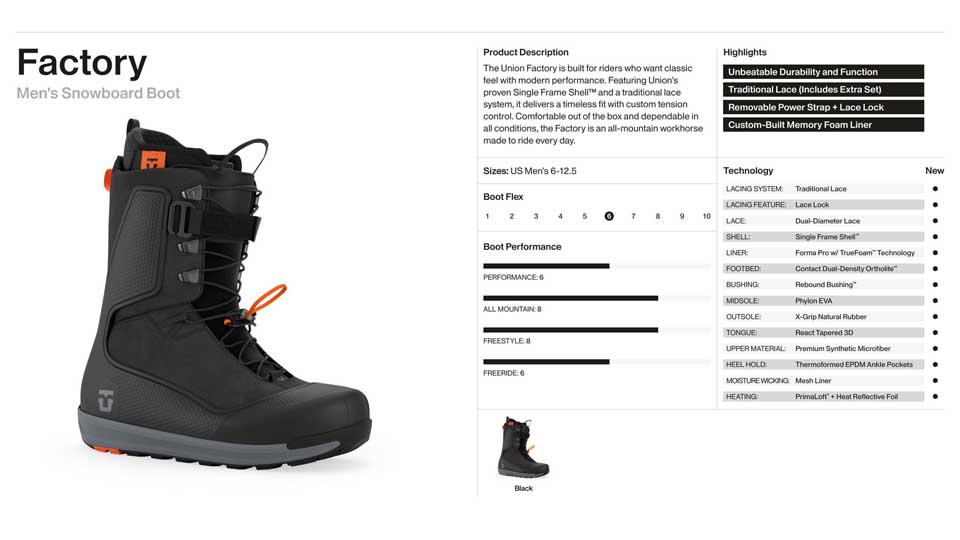
Two new boots for 2027, one BOA, one traditional lace, which is great to see.
Weight
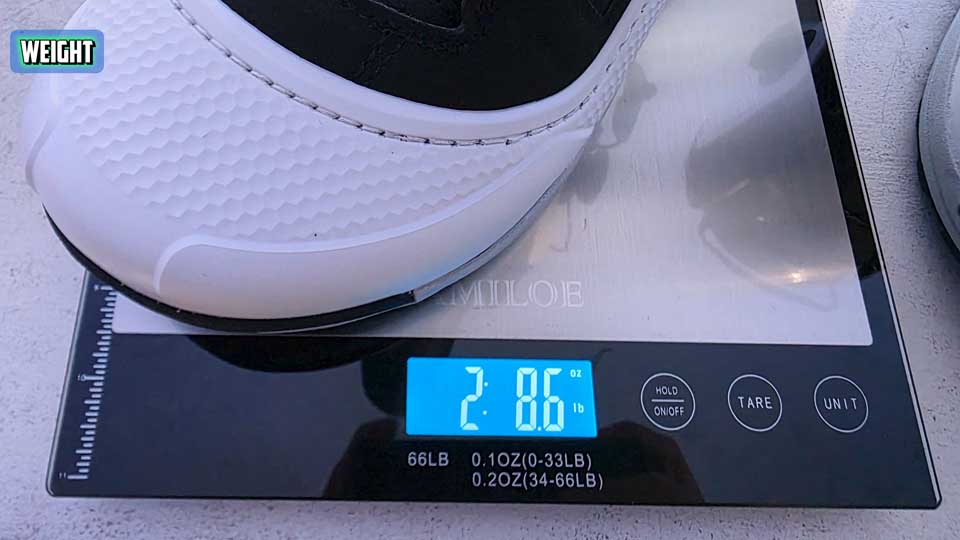
Now, when it comes to weight, these are almost 2 pounds nine ounces. That’s on the slightly heavy side of medium. But overall, it’s not going to be the kind of weight that bothers you either way. Unless you like really light boots.
Sizing
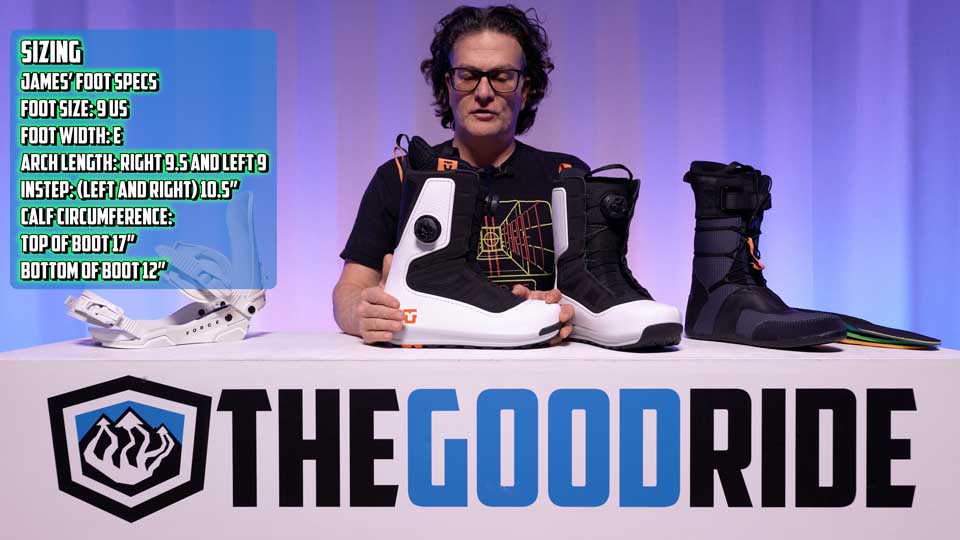
James’ Foot Specs
Foot Size: 9 US
Foot Width: E
Arch Length: Right 9.5 and Left 9
Instep: (left and Right) 10.5”
Calf Circumference:
Top of boot 17”
Bottom of boot 12”
The Union Reset Pro fits my true size nine feet perfectly in both length and width. These run really wide. I’m an E width, which is the beginning of the wide range. I felt absolutely nothing on the sides.
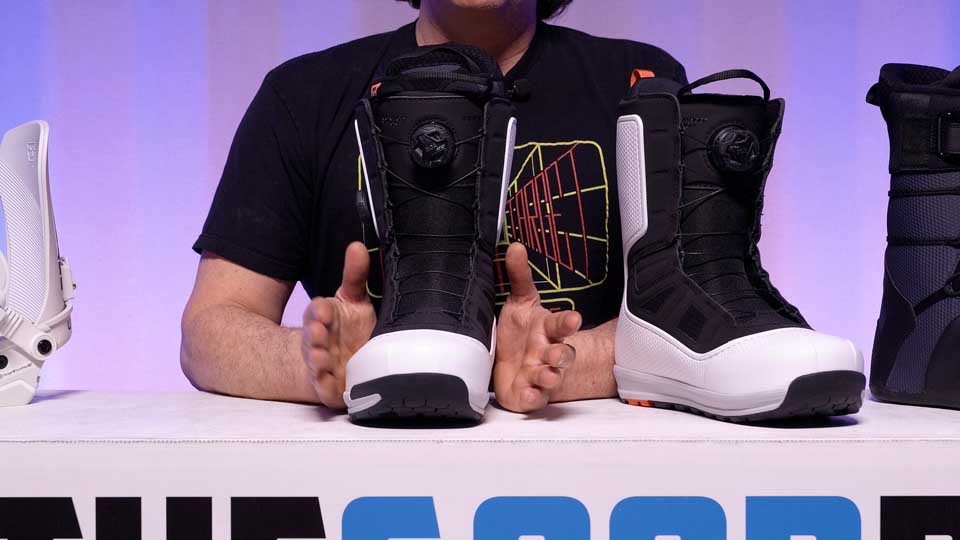
I have a friend who’s an EE in width. Yeah, I’m talking about you, Freddy. He has no problem fitting these boots as well. It’s super important to know your foot width. If you don’t, don’t buy a boot until you do, because they’re all made in different widths. But if you’re an E to an EE, I think this could work pretty well in a true size for your foot. A lot of people who are wide often have to make a horrible compromise: go with a longer boot to accommodate their wider foot. And that leads to all kinds of issues.
Do Not Heat Mold This Liner
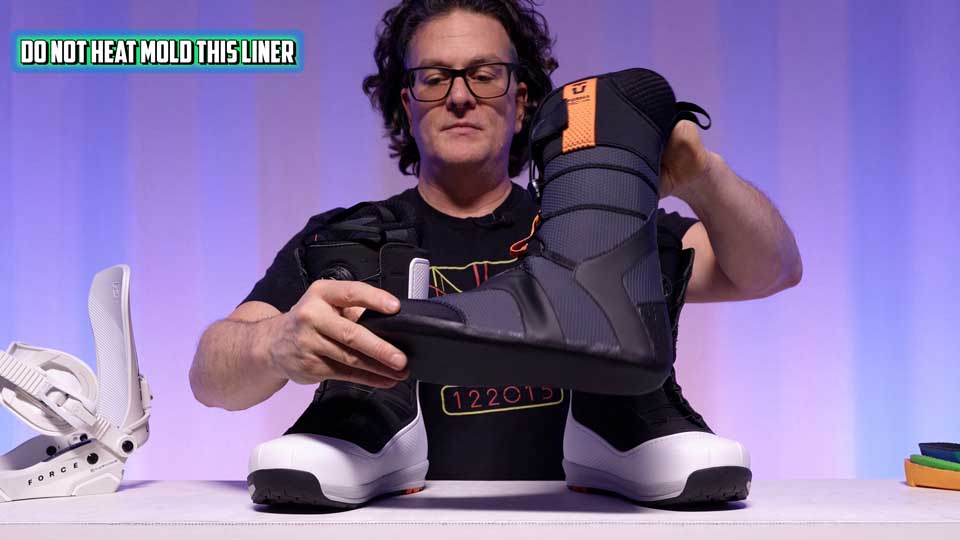
And this liner cannot be heat-molded. It is memory foam. It’s going to conform to you. And it’s very thin. Because this liner is so thin, I had trouble in the Achilles region because it doesn’t provide much protection in the heel after the first day I rode these. I had to not ride these for almost two weeks to let my Achilles heel recover. Then, when I got back in it, it felt a lot better. If I had ridden that every day, it might have broken me. So I’m glad I took the break and came back. And then the next two days after that Achilles heel issue, these started to feel pretty good.
So I was lucky the boot didn’t break me, but it could break you, so be wary of that. If you have a more pronounced, somewhat sensitive Achilles heel, like I do, despite having the last name Biesty.
Insole
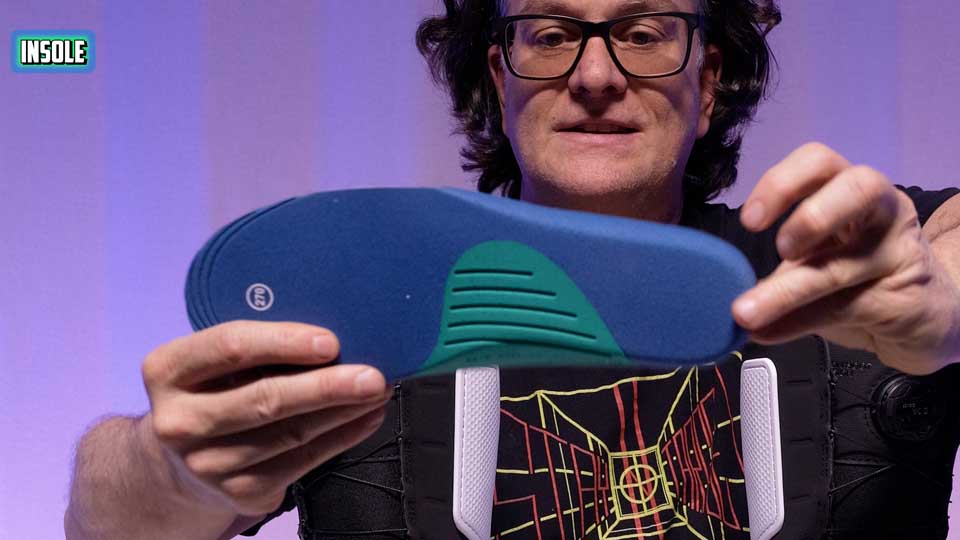
When it comes to the insole, they didn’t do a bad job here. It’s kind of thick in the heel. It has a little different material for arch support, but it’s a very flat insole. And I switched to my footprint, Kingfoam Orthotic Elite, or my footprint game-changers pro sports, to get more shock absorption with both. But as it stands, this is one of the better insoles in the industry. But most of them are pretty bad.
Adjustability/Lacing System
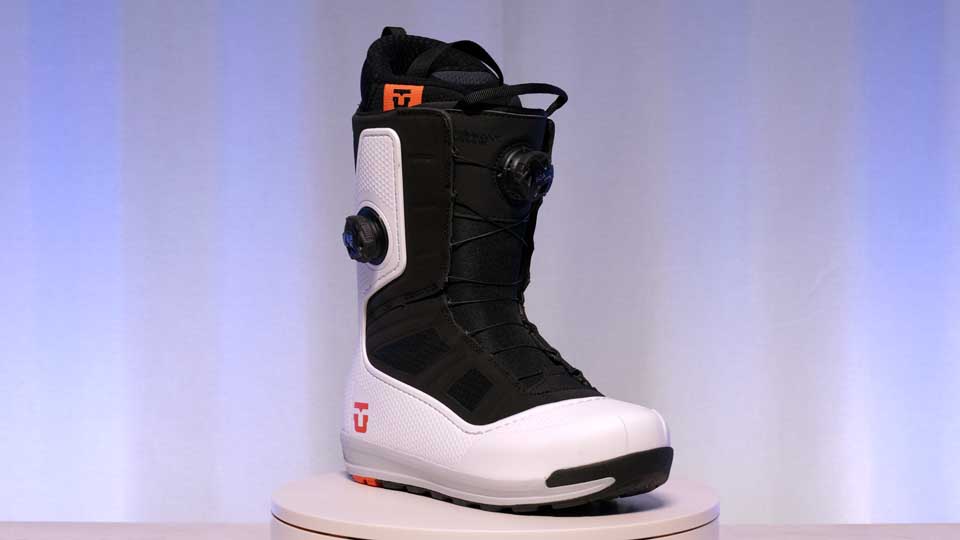
Now, when it comes to the BOA system, getting this on and off is easy, but not fast. Because BOA is slow, they just take a lot of twisting. You have to be careful when you pop them out if you want a micro-adjust.
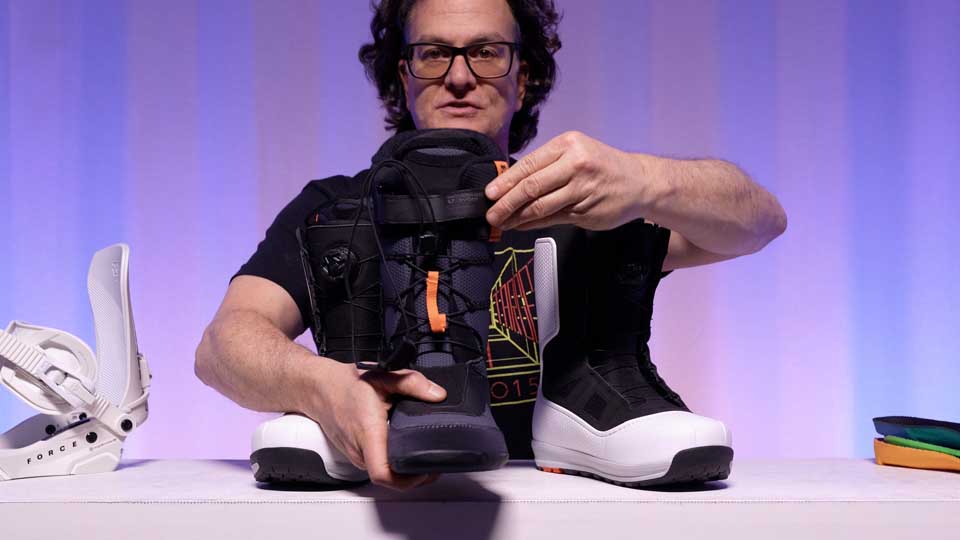
And one thing I do like is that the liner has the lacing attached and a power strap up here for better support around the top, giving you a really good fit. When there’s literally nothing in the boot here like this, you can take this liner with all the stuff attached and toss it. Then you can go with something like the Remind Solution snowboard liner, which will really change how this fits and feels.
BOA Height Issue
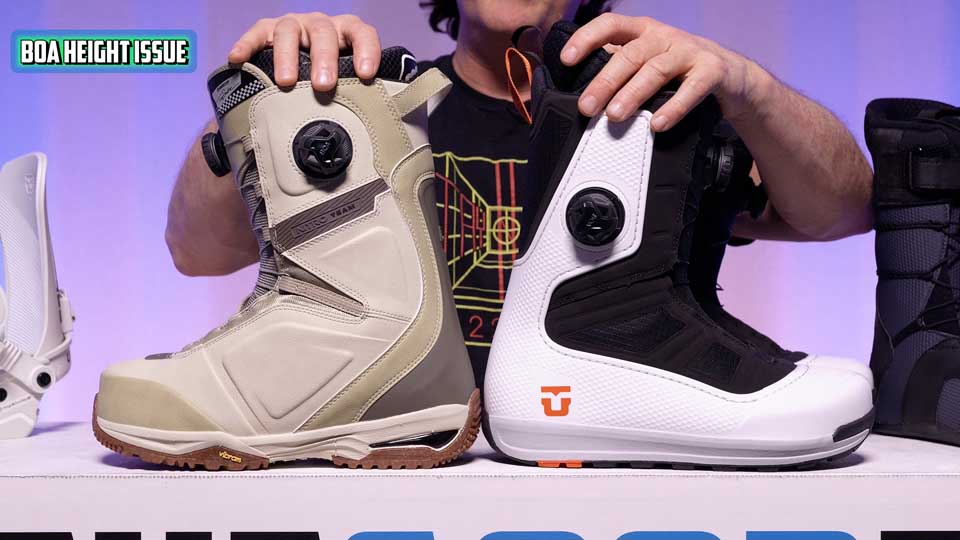
Now here’s a problem with the Union Reset Pro BOA. It sits really low down. Vs. my Nitro Team BOA, which sits in a normal spot.
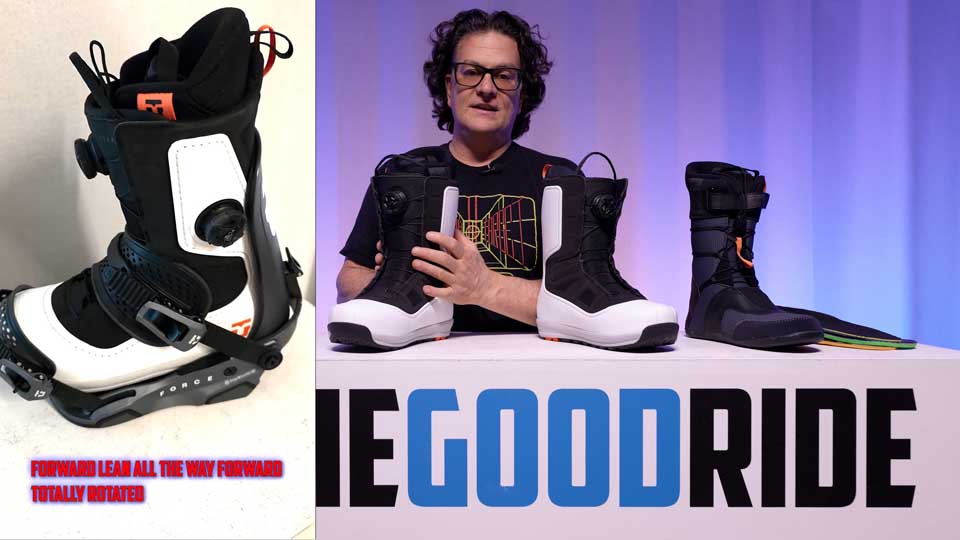
Now, when it’s set up with no forward lean and no high back rotation, it’s fine. But if you rotate your high backs like many riders still do, especially with forward lean. The combination of the two is so close to this lower BOA that it can pop it off. while you’re riding. And then you have to go get a new BOA. So I’ve heard the argument that most of the crew at C3 Capital and Union don’t rotate their high backs, but I feel this is a huge flaw, and it needs to be moved up for sure.
Flex & Response
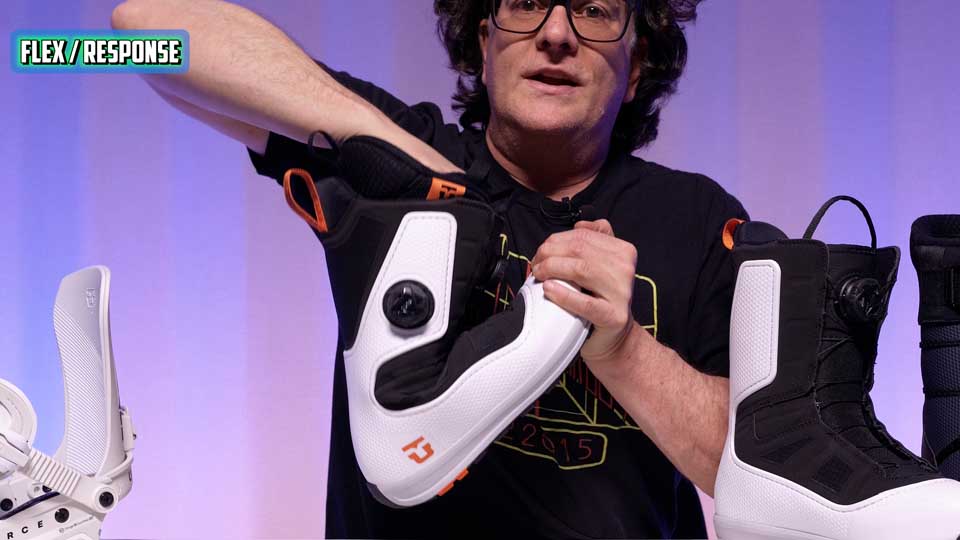
Now, when it comes to flex, these are medium for sure. They don’t feel super stiff.
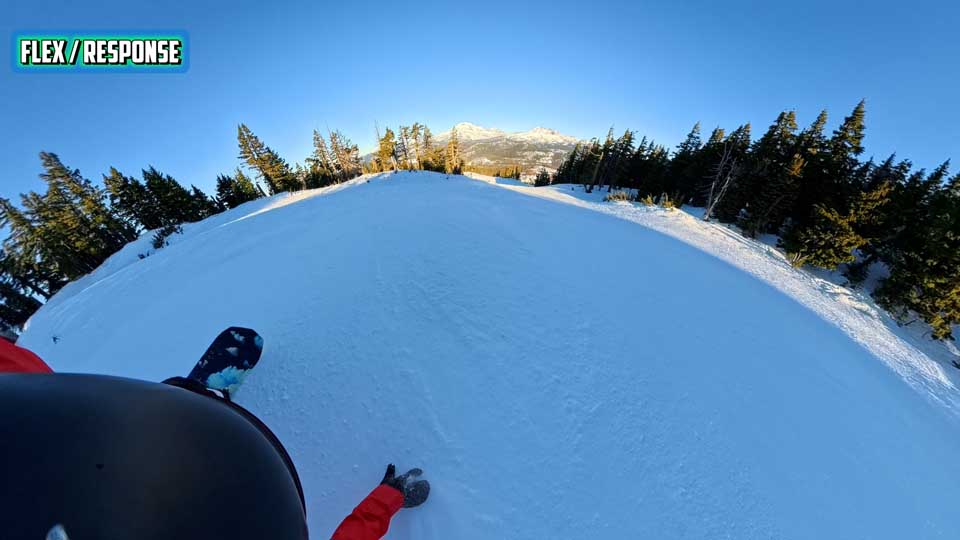
But when you get them on snow, I would say the response is medium fast. It’s just got a nice, easy forward flex, and it initiates a turn rather quickly for what this is. So these boots can blend with a wide variety of snowboards out there.
Flex Retention / Durability
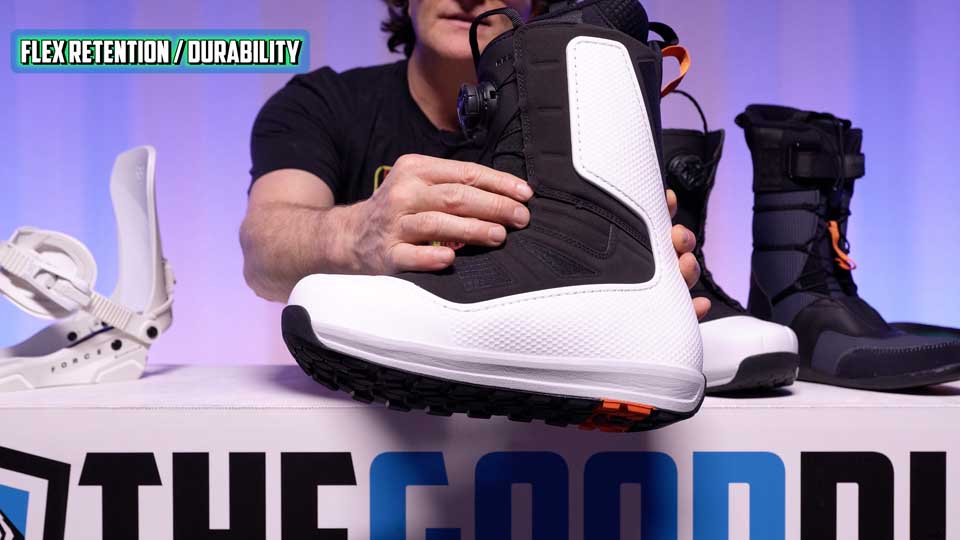
And when it comes to flex retention, there is only a little bit of articulation.
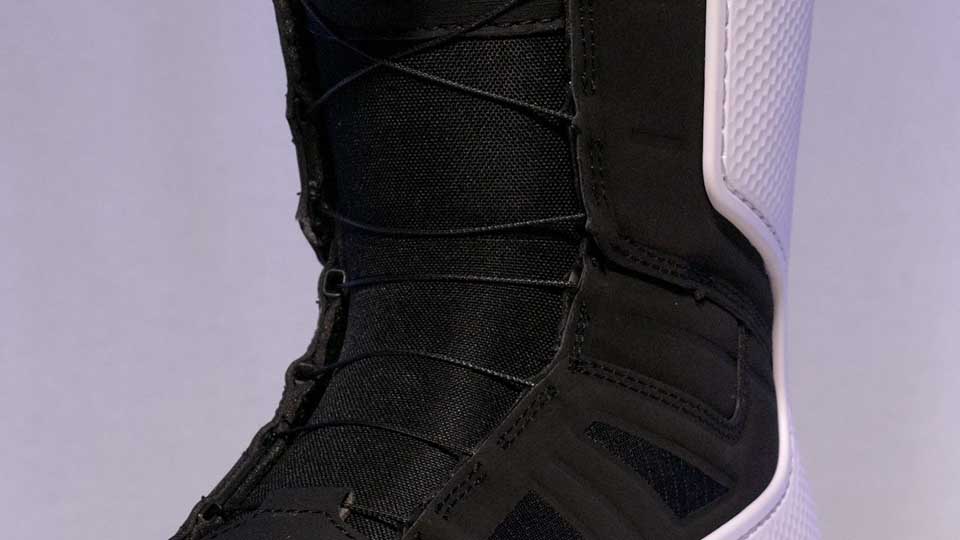
I wish they had a true articulating cuff, like the Nidecker Rift Pro BOA. Or how my Nitro team BOA does with this large neoprene cutout here to all but eliminate shell distortion. And just in the few days that I’ve been riding this, I’m already seeing it start to break down. I wish they had a rubber exterior in this area and a little more articulation to make this flex stay almost exactly how it is out of the box.
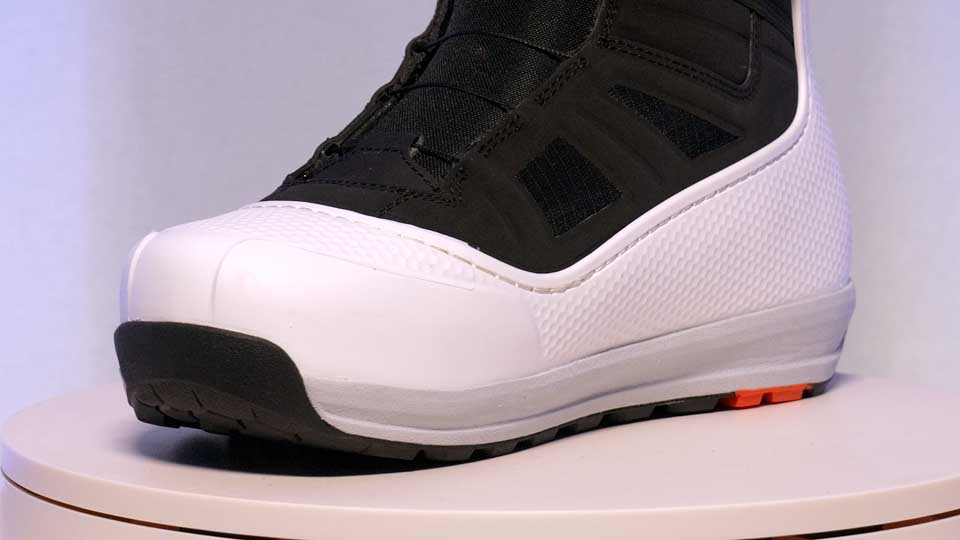
Here’s the good thing, though. After maybe 1520 days, when this is kind of worn, this is going to just hold it there at that point. And it should last a long time. And I like that the whole bottom area of this boot is plastic. So it’s not going to wear and break down in that area.
Shock Absorption / Board Feel
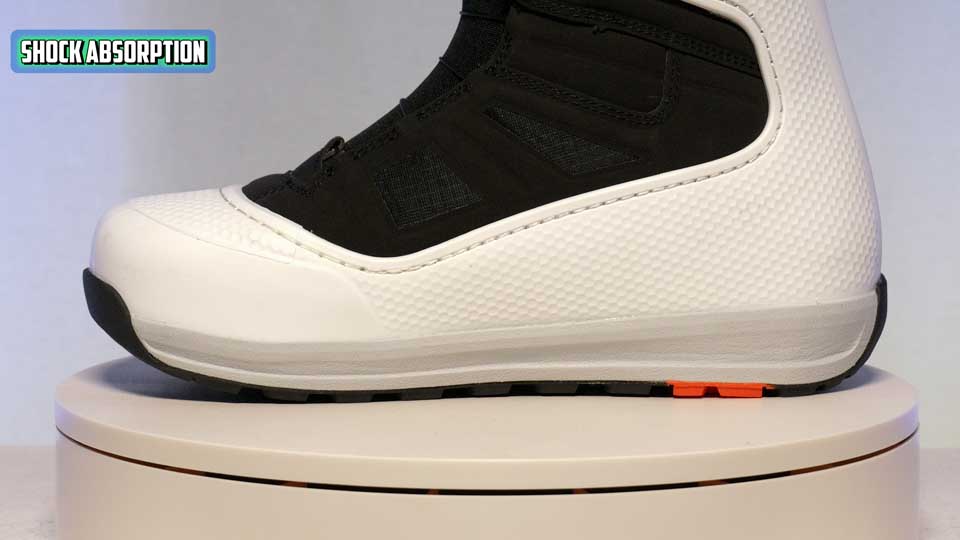
Now, when it comes to shock absorption, it looks like there’s more than there is here. This is a very minimized soul for board feel, and the board feels exceptional. But the shock absorption is not. It’s good enough, but coming off the Nitro team bonus, with all that airbag in the back and such a shock-absorbent ride, it was a rude awakening. Even coming from my Rift Pro from Nidecker, to this boot was a wake-up point too. So. If you want shock absorption, these are not your boots. But if you want board feel, what I mean by board feel is a boot that integrates with almost any binding incredibly well and creates a better connection with that binding and therefore the board. So you feel like you have fewer layers between the snow and your foot. This is an amazing boot for that.
Traction
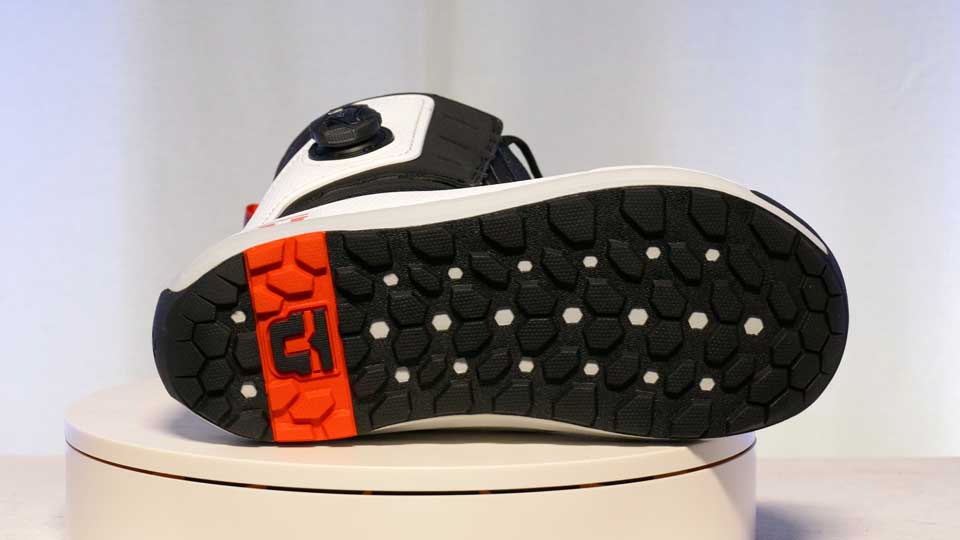
Traction wasn’t very good. I found this to be more slippery than any other boot I tried. Most of the boots I compared it against, though. Had Vibram, but even my Nidecker Rift Pros without Vibram insoles had much better grip when walking through an icy parking lot.
Footprint
The Union Reset Pro footprint is 29.8cm, which isn’t bad. It’s about there with Burton’s reduced footprint boots and my Nitro team BOA boots. So if you’re looking to avoid toe and heel drag, this might help you. It really has a low profile everywhere, from the ankle to the footprint to the width throughout the entire boot. It just fits the bindings really well.
Warmth
And when it comes to warmth, there isn’t much compared to some boots out there. But it’s not bad at all. So that’s part of the cost. You’re going to have to pay to get that low profile.
James’ Final Thoughts
So overall, this isn’t the boot for me because I want more shock absorption over board feel. I want to ride as long as I can. Having more support and more protection inside my liner from the shell. I think this BOA should be higher, so it’s not for me, but if you don’t rotate your high backs, if you love a boot with amazing board feel. You want a durable exterior around the bindings. You have a medium-to-wide foot, which is pretty good. solution for you. And I think Union did a very good job for their first time, if they fix a couple of the problems that I mentioned, this will be a hard boot not to recommend, hope this helps. And check out Dave’s review next.
Davey’s Take
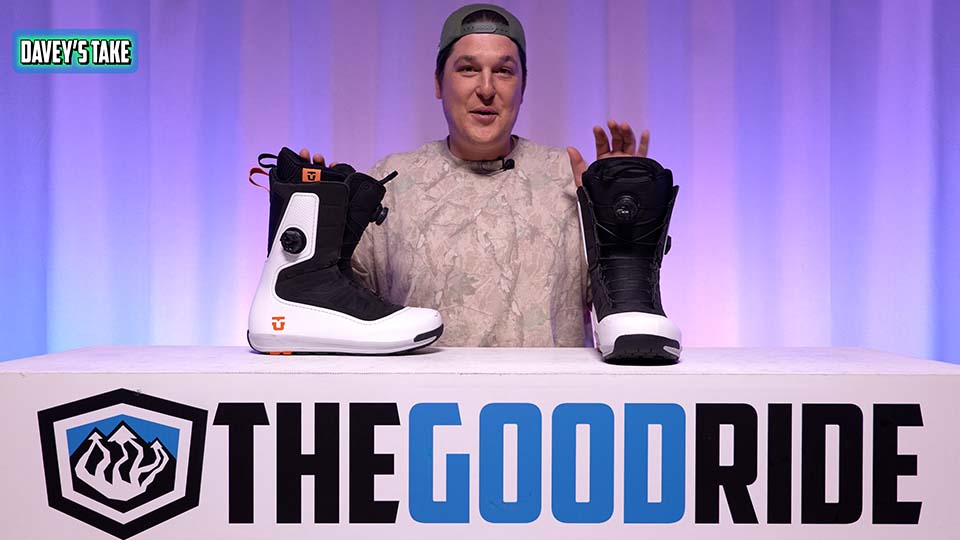
How are you doing, everybody? Davey boy, here to give you a big guy’s perspective on the 2026. Union reset Pro snowboard boots.
Sizing
for my sizing. I’m a size 12, boot six. Three and a half, 250 pounds.
Davey’s Likes
These boots were a mix of likes and dislikes. I think these are a great first run for a boot for Union. There are definitely some tweaks I need to get made. I’ll get into what I like the most about them first, and I think there’s an actual skeleton they got going on, especially through the heel. Here is a great feature, I think that is super dialed. I like the construction across here. The BOAs are really smooth. These boots are a little minimalist. They don’t feel as bulky on foot as other snowboard boots. And they’re a little lighter. And they’re very responsive. I really liked riding with these. I thought the board fuel was phenomenal.
Davey’s Dislikes
The main drawbacks I have with this side BOA are that it is in the wrong location, so it’ll hit your high back if your high back is rotated. It really does move that up and over a little bit. It’d be perfect.
There are no articulation points at the ankle, and when you bend the boot out, you can see how the crunching down increases. So I think if there is an extra little overlap between the siding, especially on the inside right here, if you had a seam and did two different pieces over the top, I think it would help it articulate and bend better without having that little bow out the side. And that’ll definitely help the durability of this boot.
The third drawback is the liner. The lightweight liner is a little too lightweight. So when you take your foot out of the boot, the liner pulls about halfway out. A lot of other liners don’t do that. And then when you put it back in, you feel it slide back into place. So it rides fine. But still, it would be nice. Maybe if it were just a little bit thicker liner so it could grip inside the foot a little better, but I’m not sure if that would even fix it.
Davey’s Final Thoughts
Overall, these boots. Great. First, model. I think for the price range, you might be able to get something that will last a little longer and perform a little better. But these are good boots. I just wish they weren’t quite as expensive. Or we just fix these little flaws, and they’ll be good to go.
Union Reset Pro Specs
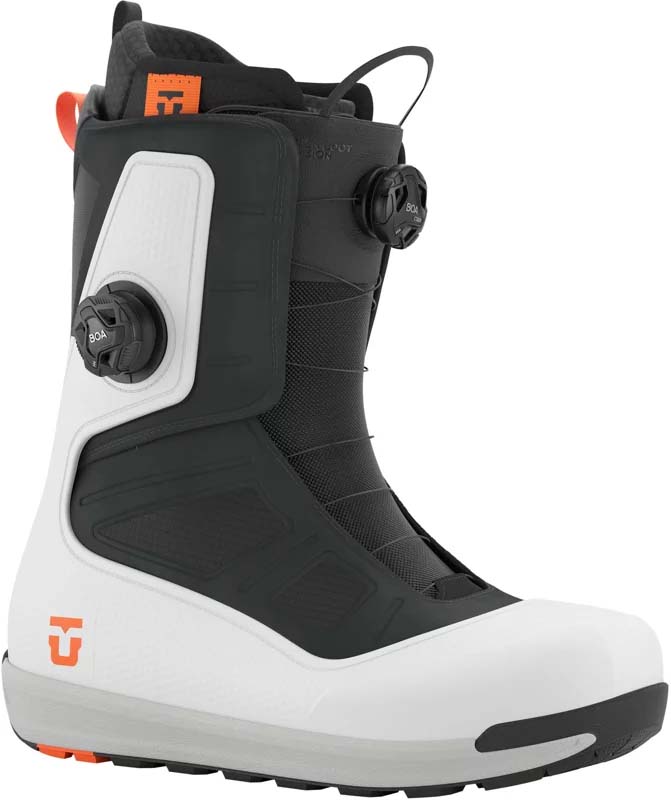
Union Reset Pro Images
We try to get as many images of the Union Reset Pro, but forgive us if they're not all there.
2026
Union Reset Pro User Reviews
Where To Buy
No obligation, but these links support the site.
Blauer Board Shop
Sun & Ski Sports
Evo
Tactics
The-House
REI
Backcountry
Blauer Board Shop
Sun & Ski Sports
evo
REI
Backcountry
More stores to buy from:
Blauer Board Shop
Sun & Ski Sports
evo
REI
Backcountry
Stoked Board Shop
Stoked Board Shop
PRFO Sports Canada
More stores to buy from:
PRFO Sports Canada
Blauer Board Shop
Sun & Ski Sports
Evo
Tactics
The-House
REI
Backcountry
Blauer Board Shop
Sun & Ski Sports
evo
REI
Backcountry
Stoked Board Shop
PRFO Sports Canada
Where To Buy
No obligation, but these links support the site.
Blauer Board Shop
Sun & Ski Sports
Evo
Tactics
The-House
REI
Backcountry
Blauer Board Shop
Sun & Ski Sports
evo
REI
Backcountry
More stores to buy from:
Blauer Board Shop
Sun & Ski Sports
evo
REI
Backcountry
Stoked Board Shop
Stoked Board Shop