Positives
- Excellent Adjustability
- Great Shock Absorption
- Great Feel Underfoot
- Works With Set Back Inserts
Negatives
- Toe Strap is Too Stretcy
- No Adjustability With Set Back Inserts
- Lost the Adjustable Response
Summary
The Rome Vice lost its ankle strap support/response adjustability, which bummed me out, but it still is a very good medium-response binding. It's just not the versatile binding that could match up with almost any board like it used to be.Where To Buy
No obligation, but these links support the site.
evo
Backcountry

SnowCountry

PRFO Sports Canada
| Riding Level | Beginner - Expert |
| Quick Release | No |
| Manufactured in | China |
| Canted Footbed | Yes |
| Burton Channel Compatible | Yes |
| Mini disc | Yes |
| Approx. Weight | Feels Light |
| Flex |

|
| Boot Support |

|
| Turn Initiation |

|
| Buttering |

|

|
|

|
|

|
|
|
|
|
|
|
Where To Buy
No obligation, but these links support the site.
evo
Backcountry
SnowCountry
PRFO Sports Canada
Rome Vice Snowboard Binding Written Review Review by The Good Ride
You have arrived at the Rome Vice Snowboard Binding Written Review from an average rider with an exceptionally objective perspective.
Ethics Statement: This review has zero brand oversight. This is our best effort at an honest, objective review to help you, the consumer. If this review helped, we’d appreciate it if you:
- Buy Through our Where To Buy Links- we get paid a small commission if you do.
- Become a Patron and get early access to reviews well before publication. https://www.patreon.com/thegoodride
- Donate to https://venmo.com/TheGoodRide (@TheGoodRide) or https://paypal.me/thegoodride
- Follow Us: https://www.instagram.com/thegoodride
- Like & Subscribe on YouTube https://www.youtube.com/@thegoodridesnow
How the Romve Vice rides and who it is for
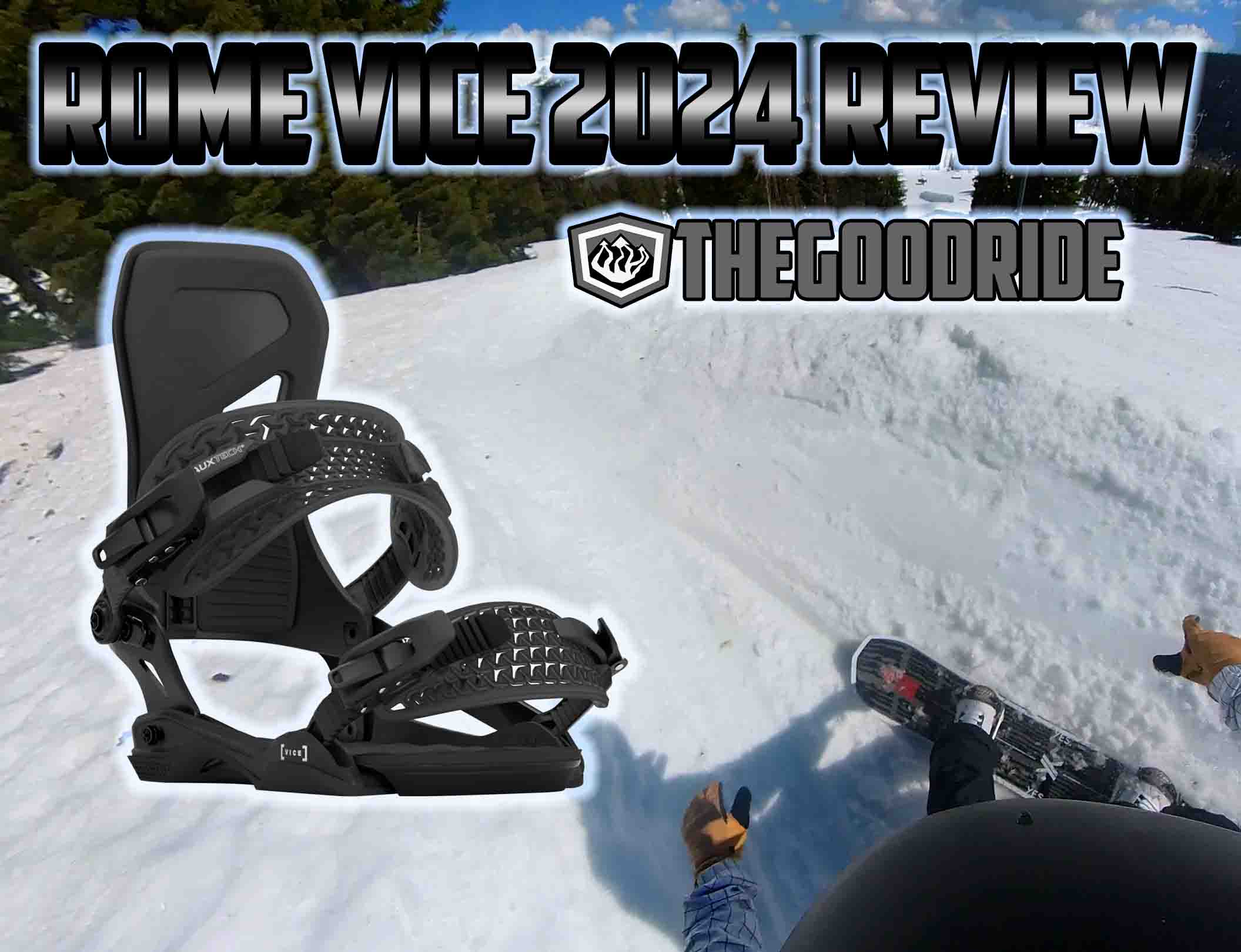
How This Review Happened: I borrowed this for an extended demo and sent it back.
Size: Medium/Size 9 Boots
Days: 10+
Conditions: Everything from pretty deep powder to firm snow.
Riders: James (Size 9, 5’10”, 185-190lbs)
Boots: Ride Torrent, Ride Fuse, Ride Deadbolt, Burton Kendo,
Insoles: F.I.T. Gamechangers
Redundancy: Strapins in case boots or bindings break.
Jacket: Jones Mtn Surf Anorak, Jones Shralpinist Stretch Jacket, Burton AK Gore-Tex Pro 3L Tusk Jacket
Pant: Jones Mountain Surf Bib, Skyline Fuse Jacket, Jones Shralpinist Stretch Bib, Burton AK Gore-Tex Pro 3L Hover Pant, Burton Gore-Tex Ballast Pant
Helmet: Smith Maze
Goggle: Smith 4D Mag
Gloves: Burton AK Clutch Mitt, Burton AK Tech Leather Glove, Drop Tahoma Mitt,
Boards: Many
Similar (but not the same) Bindings: Union Strata, Union Ultra, Burton Genesis X, Burton Cartel, Salomon Hologram, Salomon District, Nitro Team Pro, Nitro Team, Rome DOD, Rome 390 Boss
How It Was Tested
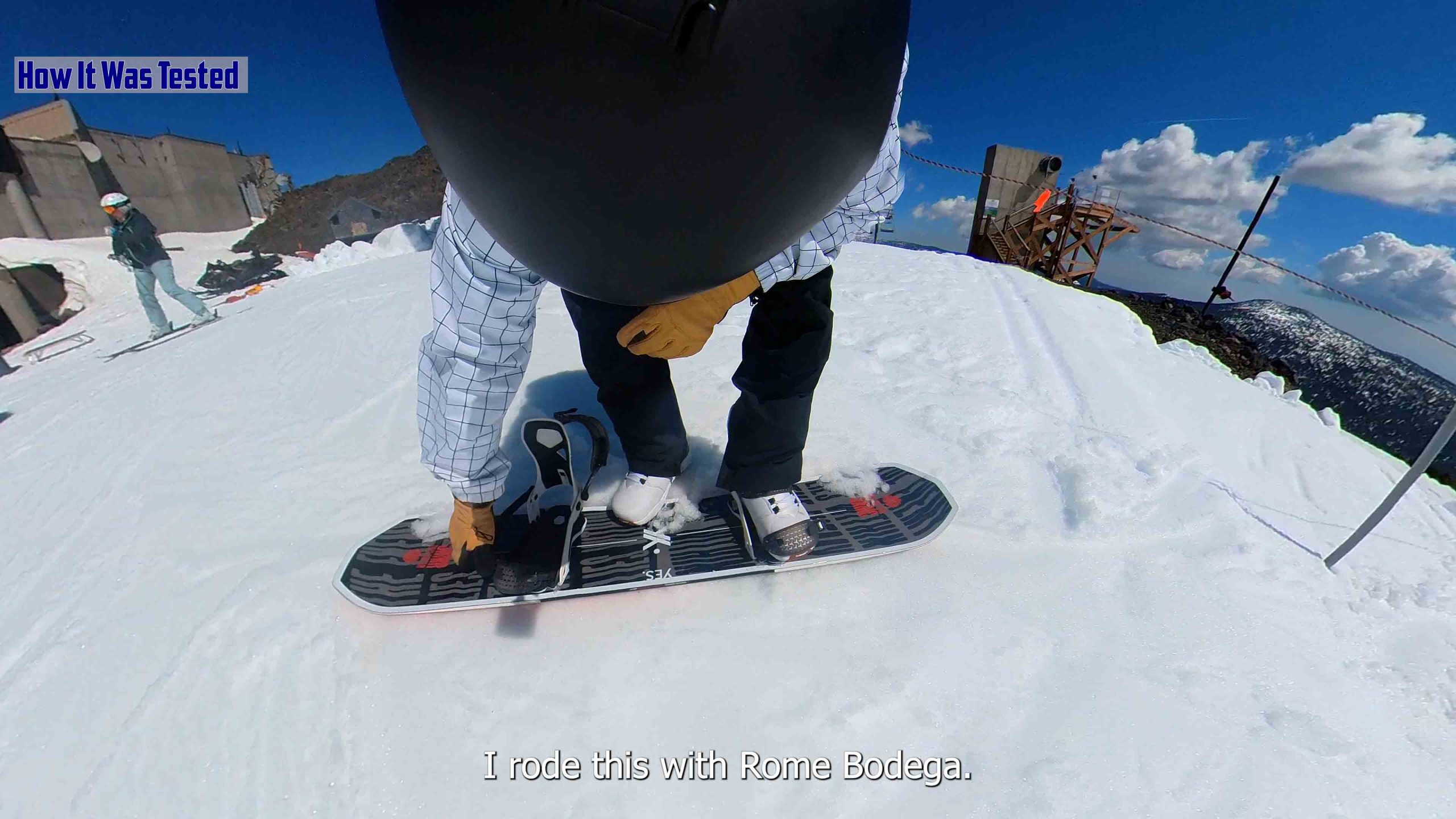
I rode this for many days with many boards and then tested it with the YES Greats, Ride Fuse Boots, and many different bindings to figure out how this fit on the spectrum.
Weight
1.8 lbs, which is pretty light.
Highback Flex
The Rome Vice has a med/soft flex with a very easy twist and good give-back at the top of the highback.
Flex Underfoot
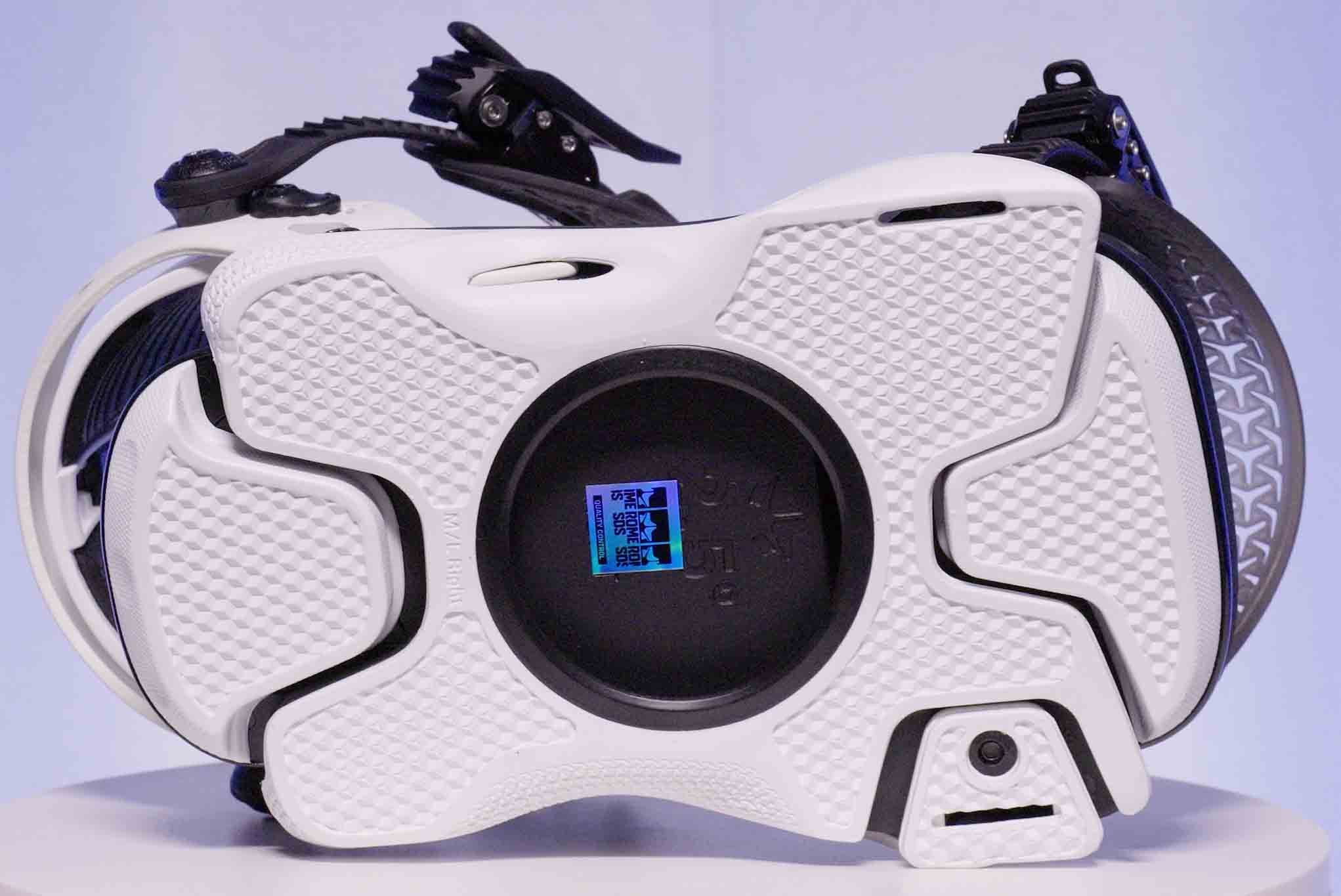
There is a hybrid mini-disc that is in between a full-sized disc and a mini-disc. Combined with foam throughout the base, this hybrid disc allows most boards to flex naturally. The Rome Vice makes it easy to butter and twist if the board flex isn’t too stiff.
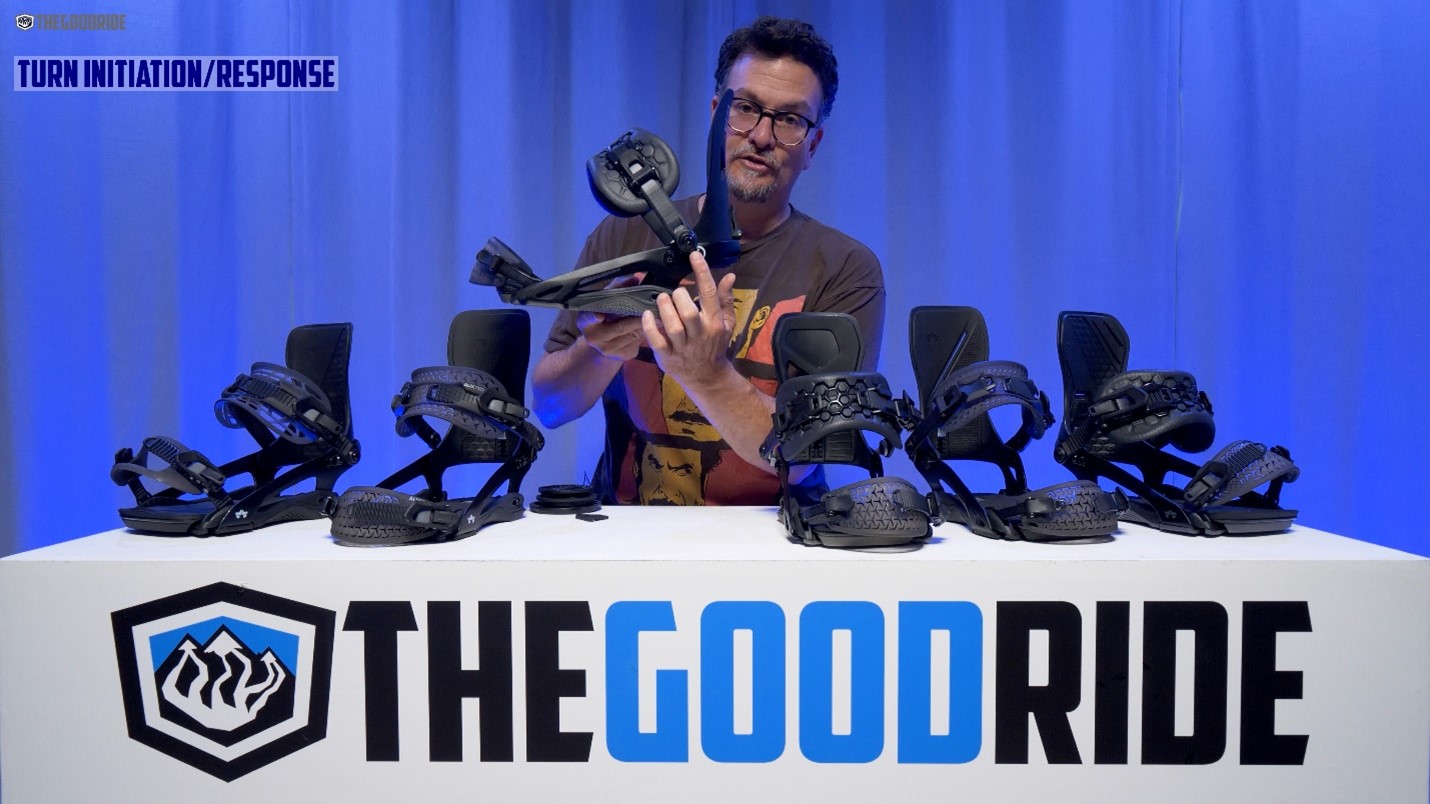
Turn Initiation/Response
I’m bummed the adjustable support/response is gone, and it doesn’t have the versatility it used to. It’s now more medium, bordering on medium/fast response-wise. It’s good with less demanding boards.
The combo of the softer high back combined with this medium response binding makes for a very smooth, symmetrical response that I enjoyed.
Shock Absorption
The Rome Vice isn’t as cushy and springy as the Rome Katana, but it is still exceptional. This is a great choice if you like a cush shock absorbent binding.
Boot Support
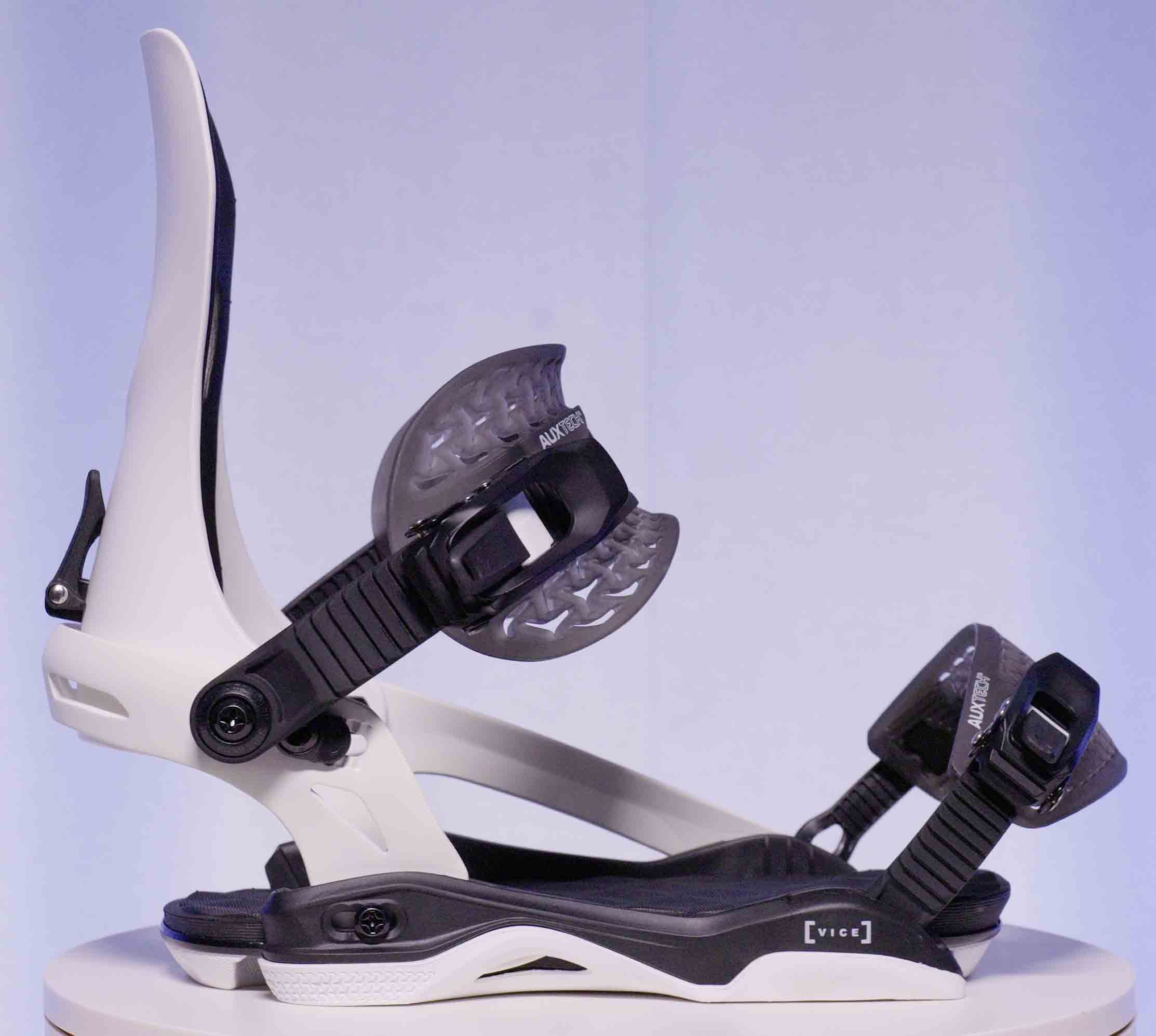
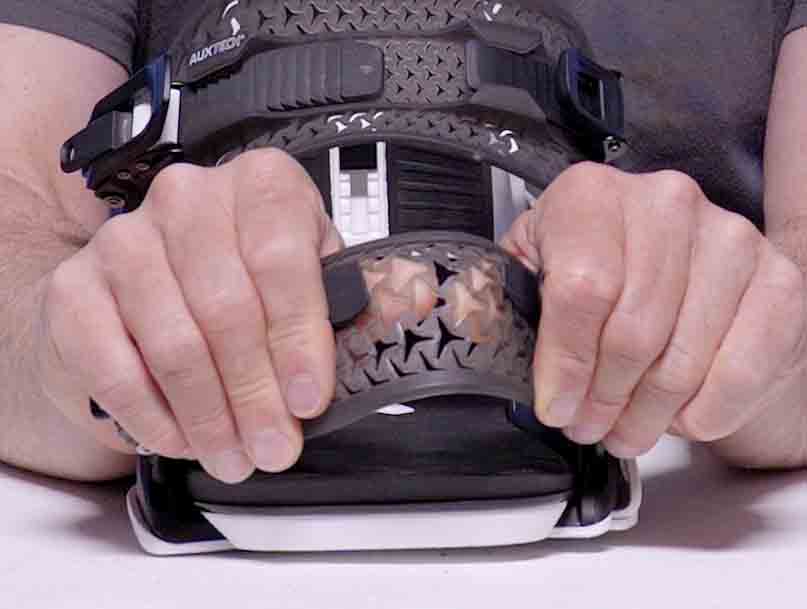
The ankle strap of the Vice is not there with the new supportive/much more comfortable Ultra Flex Strap on the Katana, Cleaver, and Black Label, but it’s very supportive. I also like and appreciate the Asym Wrap and didn’t feel like I was missing any support/response.
The Toe Strap doesn’t work for me as well as the ankle strap because it never stops stretching. I like a toe strap that flexes but grips and pulls the boot hard into the heel cup. That way, I don’t have to tighten the ankle strap too tight to avoid pressure points.
Ratchets
The Rome Vice has decent ratchets. They are not the best, but they are far from being the worst.
Adjustability
Rome does boot-to-binding adjustability really well. Not many brands pay that much attention to ensuring all boot footprints fit the recommended sizing fit. There is an adjustable heel loop and gas pedal, which is exceptional. Most will be able to center their boot in the binding and, therefore, on board. This makes for a more symmetrical turn initiation.
Then you have all the other topless straps and high back adjustability. You also have high back rotation to line up your highback with the heel side edge for less calf bite and better heel side response.
I only miss the ankle strap angle adjuster that Rome calls Pivotmount Max. It made Vice a much more versatile binding, but at least it’s more reliable without having that extra part.
Conclusion
The Rome Vice isn’t the versatile binding it used to be, but it still is a good binding for easier turning boards. I think the 390 Boss or DOD are a little better these days because they have a much more comfortable newer ankle strap, but this still has some appeal with the Asym Wrap.
Rome Vice Past Reviews
2022-2023 Rome Vice Review
Turn Ons/Swipe Right: Excellent adjustability, adjustable response, damp ride, Great feel underfoot. Works with almost any board or boot.
Turn Offs/Swipe Left: The response adjuster might have questionable long-term reliability.
Summary
The Rome Vice is a lot lighter for 2022, is very damp, has excellent adjustability, and has an adjustable response. It also has a great feel underfoot.
Ethics Statement: The manufacturer doesn’t pay us to write these reviews. We do make money from the “Where To Buy” links, but this is our best attempt at an honest and objective review from an average rider’s perspective.
How it rides and who it is for
How This Review Happened: I borrowed this for an extended demo and then returned it. I didn’t want to, though.
Days: 4+
Riders: James (Size 9, 5’10”, 185-190lbs),
Boots: Burton Kendo
Insoles: Footprint Insole Technology Gamechangers
Boards: Jones Mountain Twin, Rome Stale Fish, Rome Service Dog, Rome
Jacket: Burton AK Gore-Tex Pro 3L Tusk Jacket, Volcom TDF Infuse 3L Gore-Tex Jacket
Pant: Burton AK Gore-Tex Pro 3L Hover Pant, Burton AK Gore-Tex 2L Swash Pant, Burton Gore-Tex Ballast Pant
Helmet: Smith Maze, Smith Vantage
Goggle: Smith IO Mag, Smith 4D Mag
Gloves: Burton AK Guide Glove, Burton AK Clutch Mitt, Burton AK Clutch Glove, Burton AK Tech Leather Glove, Burton AK Tech Glove, CG Habitats Glove, CG Habitats Work Glove, Drop Tahoma Mitt, Drop Cascade Glove, Drop Web Glove,
Similar (but not the same) Bindings: Union Atlas, Union Strata, Union Force, Burton Malavita, Salomon Hologram, Nitro Team Pro,
However, these bindings can be like many other bindings due to the adjustable ankle strap.
How These Were Tested
On the first day, I took the Rome Vice out on my Jones Mountain Twin and did a sampler against the Union Atlas, Rome Cleaver, Rome Katana, Rome 390 Boss, and Rome DOD. After that, I put them on other Rome boards and, throughout the day, adjusted the ankle strap/pivot mount to see how they worked with different Rome boards.
Weight
The Rome Vice is 2 Lbs per foot with screws and discs in. They feel much lighter vs. the last time I rode these in 2018.
Highback Flex
I love this mellow high back flex. It has a really good twist and a little give going back. The Rome Vice has enough response but doesn’t bite into your calves when riding. Even if it’s not rotated correctly.
Flex Underfoot
The quasi-mini disc of the Rome Vice is pretty cool because it is smaller than a full-sized disc and bigger than a mini disc. You can mount the screws like a full-size disc and have a little more board stability or mount it like a mini disc for more flex underfoot. The only real contact is the disc, too. The rest of the base plate has EVA foam, so there is a very natural flex underfoot. It has a really good feel.
Turn Initiation/Response
So the Rome Vice can be many different bindings to many different boards and boots. I could dial this out for the Rome Agent just the same way I could dial it out for the Stale Fish.
It has an adjustable ankle strap angle. Some bindings have 2 ankle strap angle adjustments per side so you can lower it for less response/more freedom of movement or raise it for more response/support. Most have none. The Rome Vice has 4 options per side, and after playing around with it, you really feel a difference response-wise. So you can use this binding with a quiver of boards and change up the response to each board. You can even put one side higher and the other side lower. It gives you a lot of different options. I only scratched the surface, but I could have played around with this all season.
I do worry about the pivot mount’s (ankle strap adjuster) long-term reliability, but not enough to say don’t get this. It’s just such a cool feature that it’s worth a go.
Shock Absorption
The Rome Vice is a step behind the Katana, Black Label, and Cleaver but on par with the DOD and 390 Boss. It felt pretty close to my Union Atlas. Those were more damp with the rubber along the base plate but these had better shock absorption with more EVA foam in the heel pad and Gas pedal.
There is also a canted base plate to keep your joints in line better.
Boot Support
Just like a response, you can dial out your boot support. This is excellent for those with bad ankles or those who just like different support. One day it was a little messy I put it all the way up and had such a supportive locked in feel around the ankle. Then, on another day, when I wanted more freedom of movement with the Rome Agent, I lowered the ankle strap.
Ratchets
It didn’t seem amazing, but it had no glaring issues. They just never brought attention to themselves.
Adjustability
The Rome Vice has a massive amount of adjustability. There is an adjustable gas pedal and heel loop. This allows you to dial this out to your boot to center it on board. This is what I wish every binding had. Centering your boot in the binding also allows you to center your binding on board. This, along with rotating your highbacks, really improves how you turn a board, and it can eliminate issues when turning.
When centered on the board, you can actually turn the tip of the disc to the tail and slide it to fit whatever stance width you want on the board you are riding. These mini-discs are not so mini that you can’t mount them full size. This means they will work with set-back inserts. You can’t adjust them, but you can at least do it. That is more than any other mini disc.
Then you have all the other toolless adjustability for forward lean, ankle straps, toe straps, etc., so it is pretty easy to tweak this on the mountain.
Conclusion
So, in my excessively average and humble opinion, the Rome Vice for 2022, with its lighter build, became a very recommendable binding. It will match up with just about any board if you take the time to adjust it accordingly.
2018 Rome Vice Review
The Rome Vice is new this year and takes a lot of the tech from the Katana and puts it into a lower price point. You aren’t seeing tech like D30 but to us, it felt like you got a lot of the same ride at a similar price point.
Ethics Statement: We don’t get paid by the manufacturer to write these reviews. No one is perfect and we do make money from the “Where To Buy” links below, but this is our best attempt at an honest and objective review from an average riders’ perspective.
Rome Vice Specs
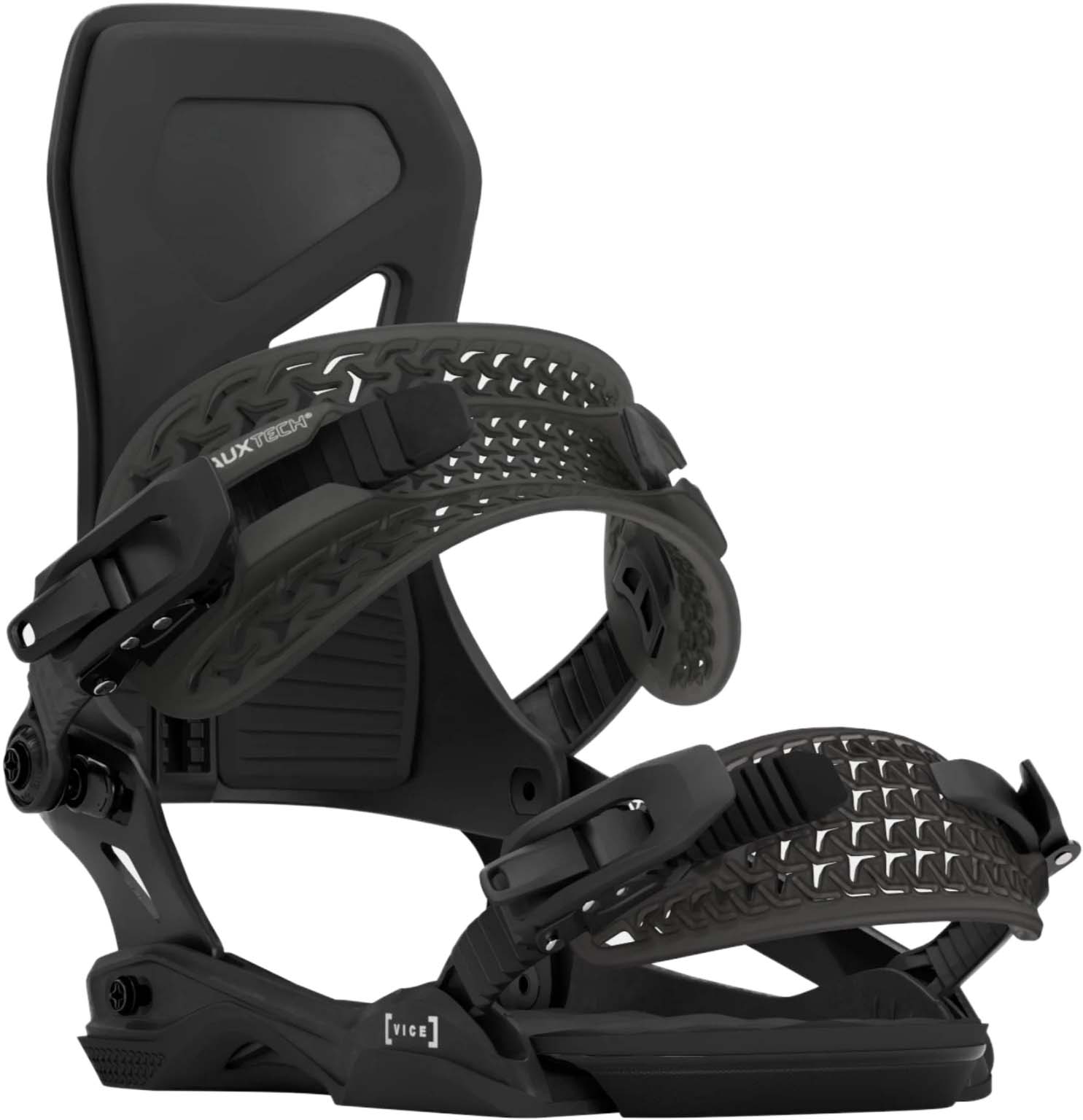
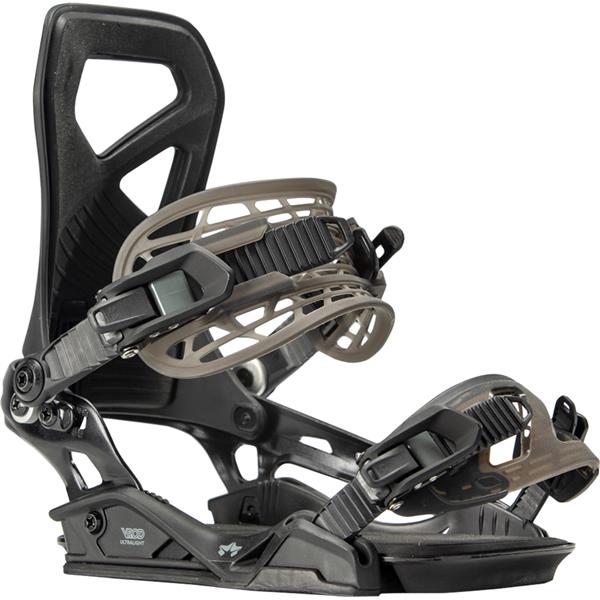
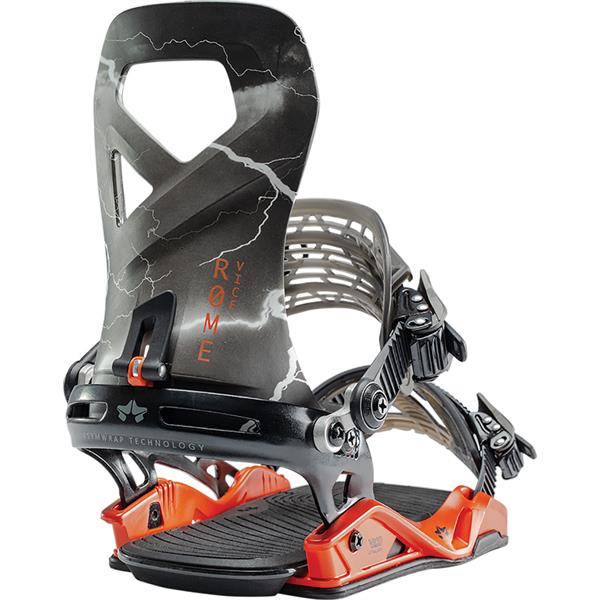
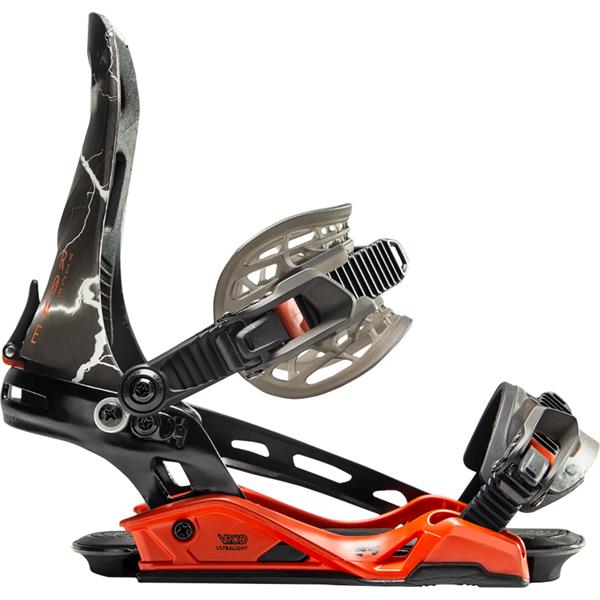
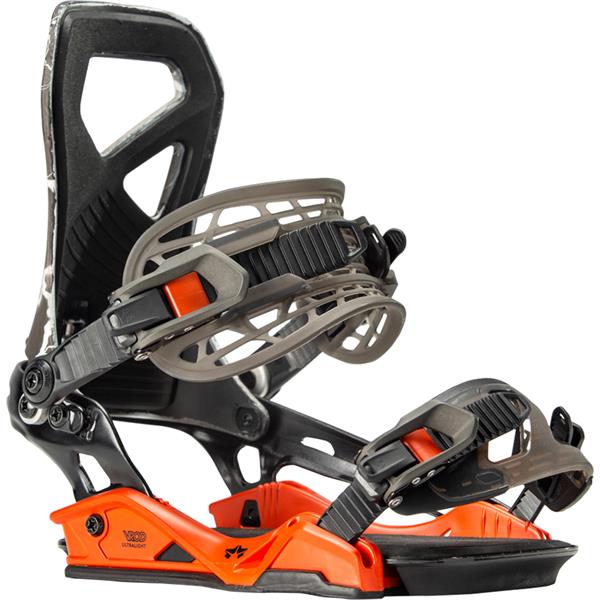
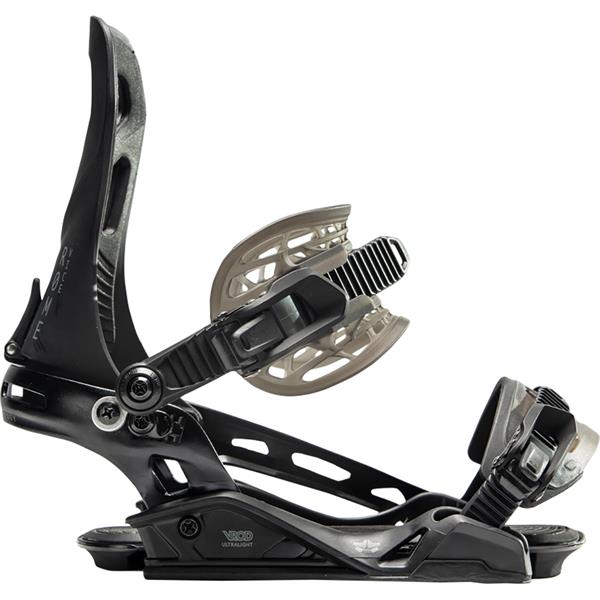
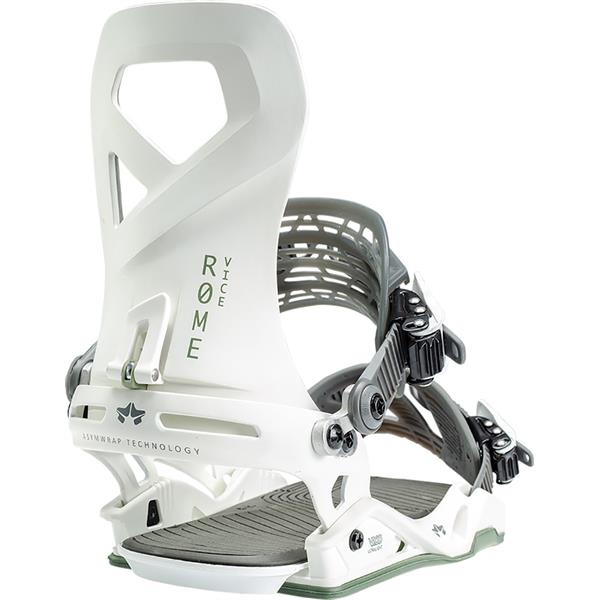
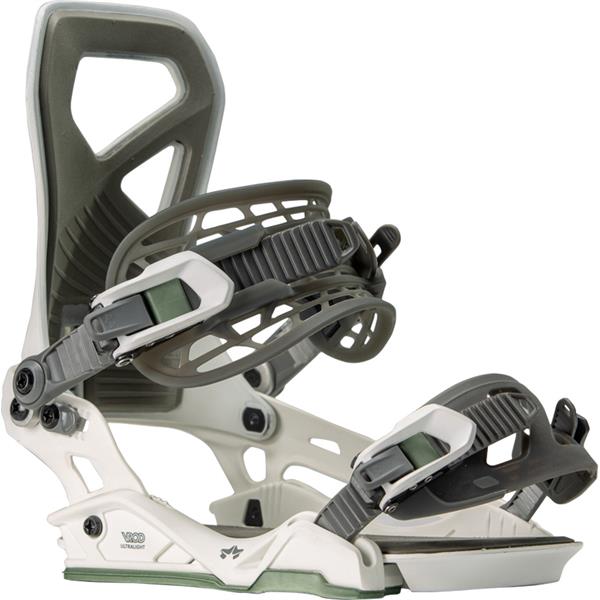
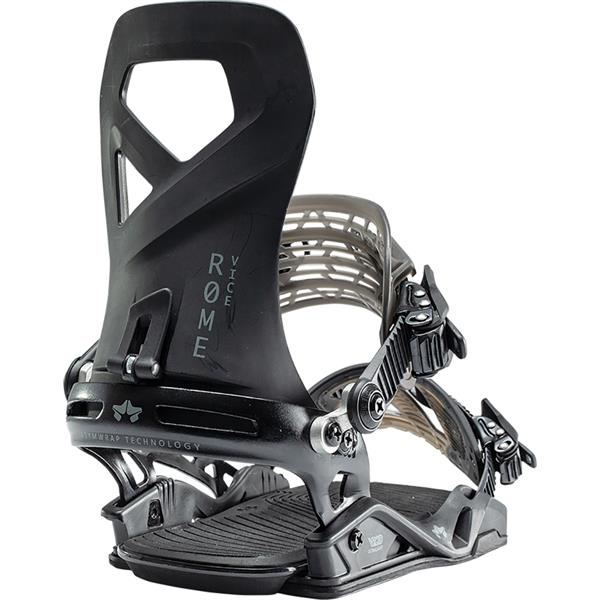
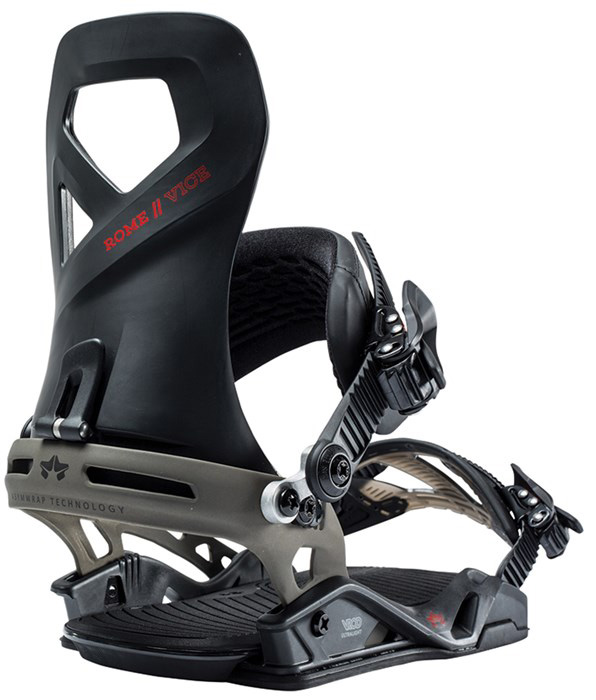
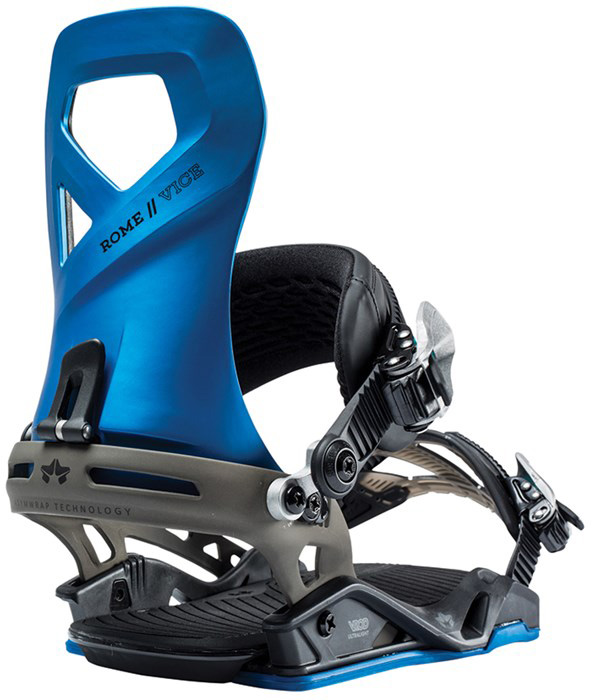
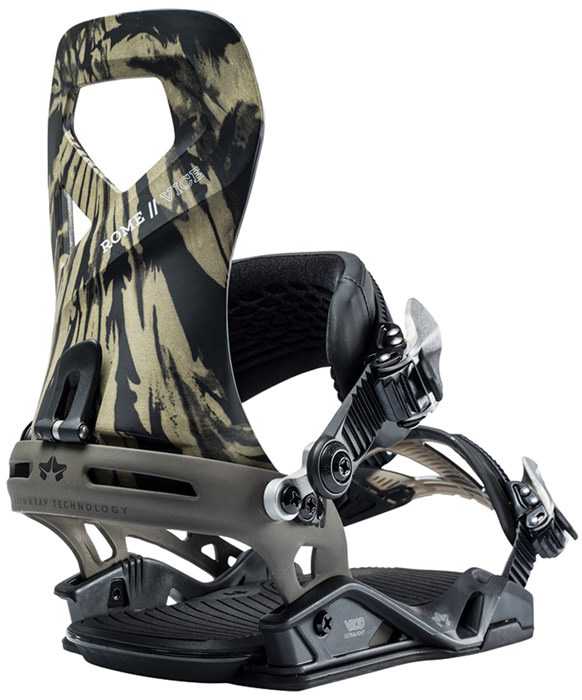
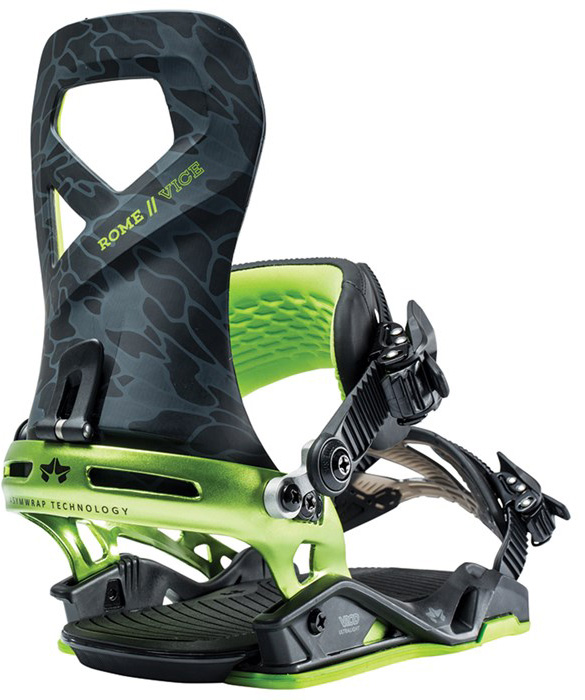
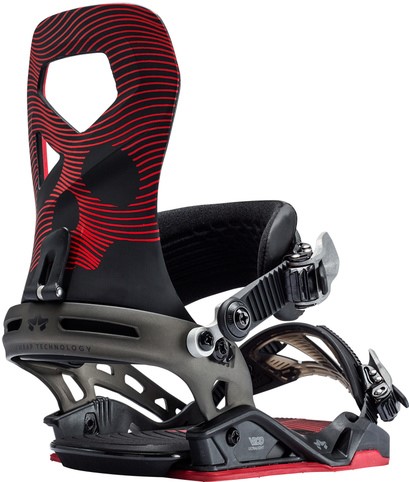
Rome Vice Images
We try to get as many images of the Rome Vice, but forgive us if they're not all there.
2024
2022

2020

2019
2018
Rome Vice User Reviews
Rome Vice Bindings
I rode the Rome Vice Bindings with my Rossignol One Mag snowboard this weekend. I really enjoyed everything about the bindings and it was a perfect match to my board. I loved the adjustability, the bindings were comfortable and had good response teamed up with the Ride Trident Boots. They seemed damp enough but I was on perfect groomers so I didn’t get to try them through cruddy snow.
Where To Buy
No obligation, but these links support the site.
evo
Backcountry
More stores to buy from:
evo
Backcountry
SnowCountry
SnowCountry
PRFO Sports Canada
More stores to buy from:
PRFO Sports Canada
evo
Backcountry
SnowCountry
PRFO Sports Canada
Where To Buy
No obligation, but these links support the site.
evo
Backcountry
More stores to buy from:
evo
Backcountry