Summary
The Never Summer Raptor is a hybrid rocker board with extra camber in the nose to provide a little more carve friendly ride. This is a pretty aggressive hybrid rocker ride. This almost has the technical feel of camber but provides a much easier float in powder. This was a freeride favorite until it was discontinued.Where To Buy
No obligation, but these links support the site.
| Riding Style | Freeride |
| Riding Level | Advanced - Expert |
| Fits Boot size (US) | 8-10, 10-12, > 12 |
| Manufactured in | USA by Never Summer |
| Shape | Directional |
| Camber Profile | Hybrid Rocker |
| Stance | Setback over 20mm |
| Approx. Weight | Feels Normal |
| Split | No |


|
|
|
|
|
|
|
|
|
|
|
|
|
|
|
|
|
|
|
|
|
|
|
|
|
| On Snow Feel |

|
| Turn Initiation |

|
| Skidded Turns |

|
| Flex |
|
| Buttering |
|
| Edge Hold |
|
Where To Buy
No obligation, but these links support the site.
Never Summer Raptor 2014 - 2011 Review by The Good Ride
Ethics Statement: We don’t get paid by the manufacturer to write these reviews. We do make money from the “Where To Buy” links, but this is our best attempt at an honest and objective review from an average riders’ perspective.
Size 159 and 164
Days:7+
Conditions: Hard Colorado snow to soft west coast snow and about 1.5 feet of thick powder.
Riders: Jame, Peter and Jimbo
Boots: Burton Ion, Burton SLX, Burton Imperial, Nike Kaiju
Bindings: Burton Diode, Union Force, Flux SF45, Union SL
Set Up: Set Back, About 23″ wide 18 front and 0 back.
We have ridden the production and demo models over the years and it always seems like the demo models are a little stiffer than the production models. So some reviews are based off the demo models and they will say it’s stiffer and some reviews are based off the production models. The Good Ride Review is based on both demo and production but we lean towards the take on the production because that is what you will be riding.
On Snow Feel: The Never Summer Raptor is a board you want to size up on and it also has a narrow waist for its size which is awesome for those that like quick edge to edge transitioning. It’s not easy in the grand spectrum of boards but it’s pretty easy for a stiff freeride board. It’s all about set back directional riding, carving, high-speed bombing and powder. The extended camber in the nose makes for a more stable feel than most of the Never Summer boards in their line.
Powder: This is not super surfy compared to other boards of this size that have a tapered tail. However, it will float in just about any depth. If you like a tapered surfy board this won’t cut it for you but if you like a big floaty double ender then the Raptor will do the trick. Also, the Raptor eats up chop and crud better than almost any hybrid rocker board out there. Since you usually aren’t’ making fresh tracks all day this is pretty important.
Turn Initiation and Carving: You have to put this board in perspective. Compare this to many of the boards in its category and you have a board that turns quickly for it’s flex but in no way is it an easy turning board. When it comes to wider turns the Raptor almost has a camber like feel. The Raptor is also very carve friendly. The Directional Rocker with extended camber in the nose also helps with this as well because it allows for more stability at the tail and between the feet. This is really fun to lean into a carve and it has a surprising amount of spring out of the turn for a hybrid rocker board.
Speed: There aren’t many hybrid rocker boards that get out of the Great category when it comes to speed but this does. The base is fast and the board is very damp. We love how NS can dampen a board without making it feel dull and there are no complaints from us here. It’s about as fast as a hybrid rocker board can go.
Uneven Terrain: The Raptor is not as easy as other Never Summer boards in bumpy terrain but it’s way better than it should be for a board of this flex and design.
Approximate Weight: This is not heavy but it’s not very light either. It’s light for a bigger board and it won’t be any worse than any of the other boards in this category.
Edge Hold: Like all Never Summer boards this grips really well in hard snow. We felt it hold its edge in harder snow but it’s not like aggressive magnetraction and not an ice specialist. When the snow is soft it feels great and not too grabby. So it handles a wide variety of conditions without ever having issues. The vario grip side cut really works well.
Flex: This is a medium/stiff aggressive type of ride and it’s no butter board.
Switch: It’s not ideal by any means. Very different switch than regular.
The rest doesn’t really matter because this is not a board for the park and we don’t recommend it go there. We will say that the board has lot’s of pop so if you like to ollie over natural terrain or hit a big natural jump the Raptor will be fine.
So if you are into boards like the Arbor A-Frame and Nidecker Platinum but want a hybrid rocker board then you might be really into the Raptor. It’s no tapered surfy pow board but it will turn ok and will get you through almost any depth of powder in the flats back to the chair.
Never Summer Raptor Specs
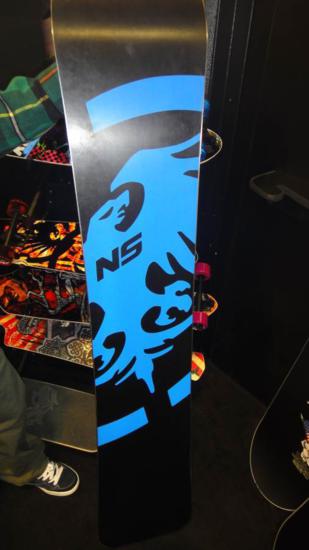
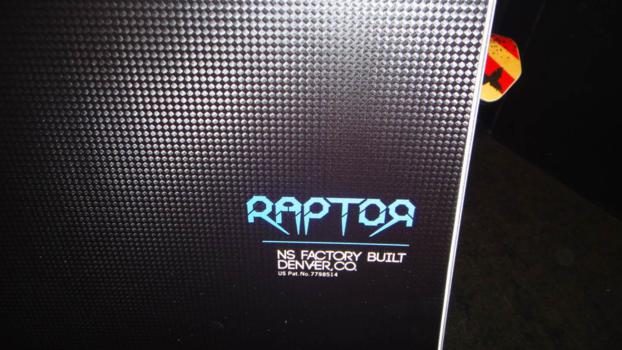
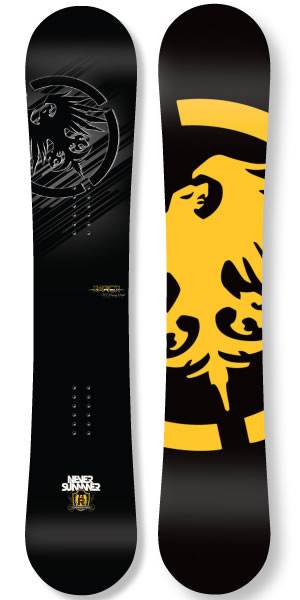
Never Summer Raptor Images
We try to get as many images of the Never Summer Raptor, but forgive us if they're not all there.
2014


2013
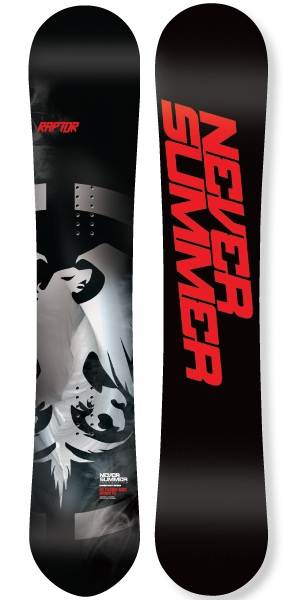
2012

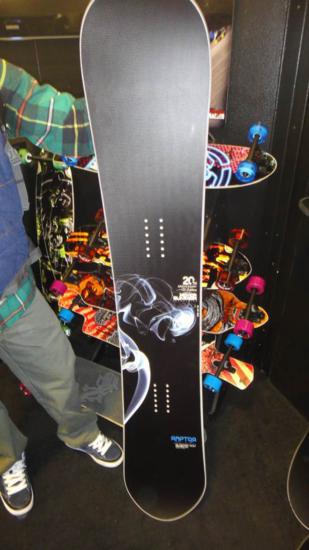
2011
Never Summer Raptor User Reviews
NS hits it again in 2014
I have ridden many boards in my 15+ years of riding and so far NS boards have been the best! My primary board last year was a NS Proto. Tons of fun but not great for the deep stuff. I Purchased a Bataleon Camel Toe, and sold it after the first ride. Then I tried a Charlie Slasher, the Proto floated better than that! I knew NS boards had the float I was looking for. Went with the Raptor as a hard Charging board that can handle the deep. This board met and exceeded my expectations. VERY stable feel (even when flat basing) effortless float in thigh deep pow. Turn initiation is super easy and effortless. Can't wait to have more days with this 1! I am sold on NS boards and honestly can't see my self riding another brand in the foreseeable future.
Cool board
switched from a 8 years old NS premier to this board and it realy rocks. Holds an edge like nothing even on icy conditions compared to my old premier. It was excellent in powder, always floating on top of the powder, never digging me in. A board I can recommand to any freerider and carver
Love this board
I bought this board for mixed days on the mountain - not deep powder , but not hard park either. I love it. I was slightly skeptical about the hybrid rocker - seemed like an odd design - but it carves incredibly well and is crazy responsive especially for tighter turns AND it does well in deeper snow too. It's very light, which is also fun.
Where To Buy
No obligation, but these links support the site.
No Results Found
No Results Found
Where To Buy
No obligation, but these links support the site.